---
title: Michigan Secretary of State Race 2026 Voter Guide
description: "Garlin Gilchrist vs. Anthony Forlini: who should run Michigan's elections? A plain-language guide to the 2026 Secretary of State race."
image: https://michwomen.com/hubfs/michigan-secretary-of-state-race-2026-voter-guide-1260x630px.jpg
---
[Skip to content](https://michwomen.com/blog/michigan-secretary-of-state-race-2026-voter-guide#main-content)
[](https://michwomen.com/)
- [News](https://michwomen.com/voter-and-civic-resources#inthenews)
Show submenu for News
- [Governor](https://michwomen.com/blog/2026-candidates-for-michigan-governor#recent-articles)
- [U.S. Senate](https://michwomen.com/blog/2026-candidates-for-michigan-us-senate#recent-articles)
- [Judicial](https://michwomen.com/blog/michigan-judicial-election-2026-voter-guide#recent-articles)
- [Secretary of State](https://michwomen.com/blog/michigan-secretary-of-state-race-2026-voter-guide#recent-articles)
- [Attorney General](https://michwomen.com/blog/michigan-attorney-general-race-2026-voter-guide#recent-articles)
- [Voter Guides](https://michwomen.com/#voter-guides)
Show submenu for Voter Guides
- [Governor](https://michwomen.com/blog/2026-candidates-for-michigan-governor)
- [Secretary of State](https://michwomen.com/blog/michigan-secretary-of-state-race-2026-voter-guide)
- [Attorney General](https://michwomen.com/blog/michigan-attorney-general-race-2026-voter-guide)
- [Judicial](https://michwomen.com/blog/michigan-judicial-election-2026-voter-guide)
- [U.S. Senate](https://michwomen.com/blog/2026-candidates-for-michigan-us-senate)
- [U. S. House](https://michwomen.com/michigan-united-states-house-of-representatives)
- [Michigan Senate](https://michwomen.com/michigan-state-senate)
- [Michigan House](https://michwomen.com/michigan-house-of-representatives)
- [Michigan Senate 35](https://michwomen.com/blog/2026-candidates-for-michigan-senate-district-35)
- [Civic Resources](https://michwomen.com/voter-and-civic-resources)
Show submenu for Civic Resources
- [Event 2026-10-17 Bay City](https://michwomen.com/blog/event-10-17-26-find-your-lane-voter-workshop-aauw-bay-city)
- [How to Vote](https://michwomen.com/blog/how-to-vote-in-michigan)
- [Government](https://michwomen.com/government)
Show submenu for Government
- [Federal](https://michwomen.com/federal-government)
- [State (Michigan)](https://michwomen.com/michigan-elected-officials)
- [Local (Saginaw)](https://michwomen.com/saginaw-local-government)
- [Quick Survey](https://e9ffr.share.hsforms.com/22-r4vpc1She8KHq03FcaIw)
- [Links](https://michwomen.com/links)
- [All](https://michwomen.com/blog)
- [About](https://michwomen.com/about)
Show submenu for About
- [Our Sources](https://michwomen.com/blog/michigan-women-strategy-impact-guide#voice-editorial-standards)
- [Strategy Guide](https://michwomen.com/blog/michigan-women-strategy-impact-guide)
- [Who We Are](https://michwomen.com/about#who)
- [Core Values](https://michwomen.com/about#values)
- [The Why](https://michwomen.com/about#the-why)
- [The Foundation](https://michwomen.com/about#foundation)
- [The Board](https://michwomen.com/about#board)
- [Contact Us](https://michwomen.com/contact)
- [Subscribe](https://michwomen.com/join)
- [Search](https://michwomen.com/search)
Open main navigation
Close main navigation
- [News](https://michwomen.com/voter-and-civic-resources#inthenews)
Show submenu for News
- [Governor](https://michwomen.com/blog/2026-candidates-for-michigan-governor#recent-articles)
- [U.S. Senate](https://michwomen.com/blog/2026-candidates-for-michigan-us-senate#recent-articles)
- [Judicial](https://michwomen.com/blog/michigan-judicial-election-2026-voter-guide#recent-articles)
- [Secretary of State](https://michwomen.com/blog/michigan-secretary-of-state-race-2026-voter-guide#recent-articles)
- [Attorney General](https://michwomen.com/blog/michigan-attorney-general-race-2026-voter-guide#recent-articles)
- [Voter Guides](https://michwomen.com/#voter-guides)
Show submenu for Voter Guides
- [Governor](https://michwomen.com/blog/2026-candidates-for-michigan-governor)
- [Secretary of State](https://michwomen.com/blog/michigan-secretary-of-state-race-2026-voter-guide)
- [Attorney General](https://michwomen.com/blog/michigan-attorney-general-race-2026-voter-guide)
- [Judicial](https://michwomen.com/blog/michigan-judicial-election-2026-voter-guide)
- [U.S. Senate](https://michwomen.com/blog/2026-candidates-for-michigan-us-senate)
- [U. S. House](https://michwomen.com/michigan-united-states-house-of-representatives)
- [Michigan Senate](https://michwomen.com/michigan-state-senate)
- [Michigan House](https://michwomen.com/michigan-house-of-representatives)
- [Michigan Senate 35](https://michwomen.com/blog/2026-candidates-for-michigan-senate-district-35)
- [Civic Resources](https://michwomen.com/voter-and-civic-resources)
Show submenu for Civic Resources
- [Event 2026-10-17 Bay City](https://michwomen.com/blog/event-10-17-26-find-your-lane-voter-workshop-aauw-bay-city)
- [How to Vote](https://michwomen.com/blog/how-to-vote-in-michigan)
- [Government](https://michwomen.com/government)
Show submenu for Government
- [Federal](https://michwomen.com/federal-government)
- [State (Michigan)](https://michwomen.com/michigan-elected-officials)
- [Local (Saginaw)](https://michwomen.com/saginaw-local-government)
- [Quick Survey](https://e9ffr.share.hsforms.com/22-r4vpc1She8KHq03FcaIw)
- [Links](https://michwomen.com/links)
- [All](https://michwomen.com/blog)
- [About](https://michwomen.com/about)
Show submenu for About
- [Our Sources](https://michwomen.com/blog/michigan-women-strategy-impact-guide#voice-editorial-standards)
- [Strategy Guide](https://michwomen.com/blog/michigan-women-strategy-impact-guide)
- [Who We Are](https://michwomen.com/about#who)
- [Core Values](https://michwomen.com/about#values)
- [The Why](https://michwomen.com/about#the-why)
- [The Foundation](https://michwomen.com/about#foundation)
- [The Board](https://michwomen.com/about#board)
- [Contact Us](https://michwomen.com/contact)
- [Subscribe](https://michwomen.com/join)
- [Search](https://michwomen.com/search)
- [Donate](https://michwomen.com/donate)
[Donate](https://michwomen.com/donate)
10/16/25, 1:52 PM
# Michigan Secretary of State Race 2026 Voter Guide
[Krista Moon](https://michwomen.com/blog/author/krista-moon)
Share: [facebook-f icon](http://www.facebook.com/share.php?u=https://michwomen.com/blog/michigan-secretary-of-state-race-2026-voter-guide) [linkedin-in icon](http://www.linkedin.com/shareArticle?mini=true&url=https://michwomen.com/blog/michigan-secretary-of-state-race-2026-voter-guide) [Twitter icon](https://twitter.com/intent/tweet?url=https://michwomen.com/blog/michigan-secretary-of-state-race-2026-voter-guide) [pinterest-p icon](http://pinterest.com/pin/create/link/?url=https://michwomen.com/blog/michigan-secretary-of-state-race-2026-voter-guide) [envelope icon](mailto:?body=https://michwomen.com/blog/michigan-secretary-of-state-race-2026-voter-guide)
**Last Update: September 27, 2026.** Garlin Gilchrist vs. Anthony Forlini: Who should run Michigan's elections? A plain-language guide to the 2026 Secretary of State race.
### [](https://e9ffr.share.hsforms.com/2QrvUZ9CESDypyaeNLUUVUA)
### Table of Contents
This guide is designed for easy online navigation with clickable sections. If you'd rather download or print a copy, you can get the full PDF version.
[Get the Voter Guide PDF](https://e9ffr.share.hsforms.com/2QrvUZ9CESDypyaeNLUUVUA)
**Or Continue to the Online Navigation Below 👇**
- [About This Guide](https://michwomen.com/blog/michigan-secretary-of-state-race-2026-voter-guide#about-guide)
- [About the Secretary of State Race](https://michwomen.com/blog/michigan-secretary-of-state-race-2026-voter-guide#about)
- [Where Things Stand](https://michwomen.com/blog/michigan-secretary-of-state-race-2026-voter-guide#current)
- [Who's Ahead in the General Election](https://michwomen.com/blog/michigan-secretary-of-state-race-2026-voter-guide#whos-ahead)
- [Top Issues Shaping the Race](https://michwomen.com/blog/michigan-secretary-of-state-race-2026-voter-guide#top-issues)
- [The Citizenship Verification Ballot Proposal](https://michwomen.com/blog/michigan-secretary-of-state-race-2026-voter-guide#ballot-question)
- [Benson's Conflict of Interest and Election Oversight](https://michwomen.com/blog/michigan-secretary-of-state-race-2026-voter-guide#conflict-of-interest)
- [In the News](https://michwomen.com/blog/michigan-secretary-of-state-race-2026-voter-guide#recent-news)
- [Meet the Candidates](https://michwomen.com/blog/michigan-secretary-of-state-race-2026-voter-guide#meet)
- [Garlin Gilchrist (D) — Lieutenant Governor ✅](https://michwomen.com/blog/michigan-secretary-of-state-race-2026-voter-guide#gilchrist)
- [Anthony Forlini (R) — Macomb County Clerk ✅](https://michwomen.com/blog/michigan-secretary-of-state-race-2026-voter-guide#forlini)
- [Other Candidates on the November Ballot](https://michwomen.com/blog/michigan-secretary-of-state-race-2026-voter-guide#other-candidates)
- [How the Money is Flowing: Campaign Finance Overview](https://michwomen.com/blog/michigan-secretary-of-state-race-2026-voter-guide#money)
- [What Happens After Election Day?](https://michwomen.com/blog/michigan-secretary-of-state-race-2026-voter-guide#after)
- [Who Is the Secretary of State Now?](https://michwomen.com/blog/michigan-secretary-of-state-race-2026-voter-guide#about-sos)
- [What Does the Secretary of State Do?](https://michwomen.com/blog/michigan-secretary-of-state-race-2026-voter-guide#what-do-they-do)
- [What Has the Secretary of State Been Doing?](https://michwomen.com/blog/michigan-secretary-of-state-race-2026-voter-guide#been-doing)
- [What to Look for in a Michigan Secretary of State](https://michwomen.com/blog/michigan-secretary-of-state-race-2026-voter-guide#what-look)
- [Dropped Out and Unendorsed Candidates](https://michwomen.com/blog/michigan-secretary-of-state-race-2026-voter-guide#unendorsed)
- [How to Vote in Michigan](https://michwomen.com/blog/michigan-secretary-of-state-race-2026-voter-guide#how)
- [Help Build a More Informed Michigan](https://michwomen.com/blog/michigan-secretary-of-state-race-2026-voter-guide#support)
---
## About This Guide
This guide is designed to help you understand both the office and the election — not tell you how to vote.
We begin by explaining what the office does, how much authority it has, and why it matters. From there, we cover the current race, the major issues, what to look for in a candidate, and profiles of everyone seeking the office. The goal is to provide the context you need to evaluate candidates based on the responsibilities of the job — not just campaign headlines.
Michigan Women updates these guides throughout the election cycle as new information becomes available. We review official government records, campaign websites, debate transcripts, campaign finance filings, public statements, and reporting from a wide range of reputable news organizations. New information is verified before it is added, and significant changes are incorporated as the race develops.
As a 501(c)(3) nonprofit organization, Michigan Women does not endorse or oppose candidates or political parties. Our role is to make Michigan government and elections easier to understand so every voter can make informed decisions with confidence.
To learn more about our research process, editorial standards, and commitment to nonpartisan civic education, visit our Strategy & Impact Guide:
[https://michwomen.com/blog/michigan-women-strategy-impact-guide#voice-editorial-standards](https://michwomen.com/blog/michigan-women-strategy-impact-guide#voice-editorial-standards)
\[[Back to Top](https://michwomen.com/blog/michigan-secretary-of-state-race-2026-voter-guide#toc)\]
---
## About the Race for Michigan Secretary of State
##### Michigan's next Secretary of State will run our elections. This is one of the most consequential — and most overlooked — races on the 2026 ballot.
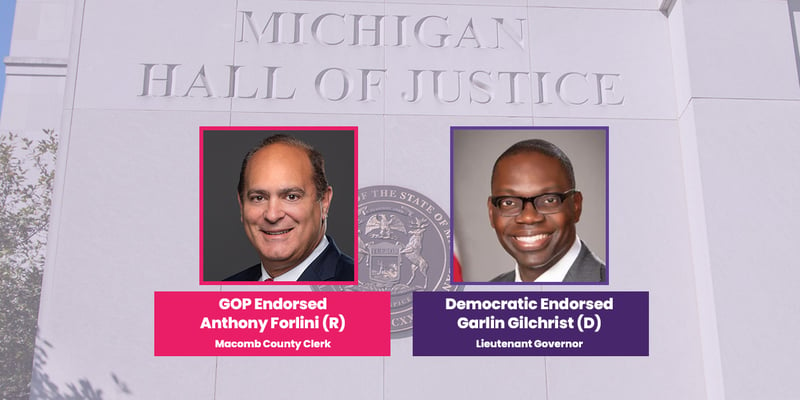
Jocelyn Benson has held the position for eight years, but term limits mean she's out — and she's running for governor instead. That means Michigan will have a brand-new Secretary of State in 2027, at a time when election administration, voter access, and government transparency are hotter topics than ever.
Unlike the governor's race, this one skips the August primary. Michigan's two major parties pick their Secretary of State nominee [at conventions](https://michwomen.com/blog/how-michigan-chooses-nominees-for-statewide-offices), not at the ballot box. Both parties have already chosen:
- Democrats nominated Lt. Gov. Garlin Gilchrist on April 19, 2026, and
- Republicans nominated Macomb County Clerk Anthony Forlini on March 28, 2026.
Both nominees were formally nominated at their parties' August nominating conventions. Three candidates from smaller parties also qualified for the November ballot: Christine Sloan (Libertarian), Scott Aughney (U.S. Taxpayers), and Eric Borregard (Green).
---
### Where things stand
The field narrowed early and stayed narrow. On the Democratic side, Gilchrist defeated Ingham County Clerk Barb Byrum and former Lottery Commissioner Suzanna Shkreli on the first ballot at the April convention. On the Republican side, Forlini defeated Oakland County activist Monica Yatooma and Clarkston school board member Amanda Love, winning outright on the first ballot in March with 55% of delegate votes.
That leaves five candidates on the November ballot. Democrat Garlin Gilchrist and Republican Anthony Forlini are the nominees of the two major parties and are the focus of this guide.
Gilchrist and Forlini are scheduled to debate on October 8, 2026, from 6:30 to 7:30 p.m., at the University of Michigan's Gerald R. Ford School of Public Policy in Ann Arbor. Bridge Michigan's Jordyn Hermani and Gongwer News Service's Zach Gorchow will moderate, and student representatives from the Michigan College Democrats and Michigan College Republicans will also have an opportunity to ask questions. Bridge Michigan will stream the debate live at bridgemi.com.
\[[Back to Top](https://michwomen.com/blog/michigan-secretary-of-state-race-2026-voter-guide#toc)\]
---
### Who's ahead in the general election?
No independent poll has tested a Gilchrist vs. Forlini general-election matchup yet. Gilchrist's campaign released an internal poll in June showing him leading 44% to 40%, but as a campaign-sponsored poll it should be read with that caveat in mind — campaigns typically release internal numbers that favor them, and the methodology hasn't been independently reviewed.
\[[Back to Top](https://michwomen.com/blog/michigan-secretary-of-state-race-2026-voter-guide#toc)\]
---
### Top issues shaping the race
The 2026 Secretary of State race is shaping up around a few core themes. Here's a plain-language look at where each candidate stands on the key issues.
| Issue | Garlin Gilchrist (D) | Anthony Forlini (R) | Shared? |
| --- | --- | --- | --- |
| **Voter citizenship verification** | Says "vanishingly few" noncitizens actually vote and that existing safeguards — including Social Security number matching and attestation — already work. Supports prosecuting anyone who does vote illegally "to the fullest extent of the law," but opposes adding documentation requirements that he says would burden eligible voters, including married women who have changed their names. | Argues self-attestation alone is insufficient. Wants government database verification of citizenship before registration and has personally flagged noncitizens in Macomb County's voter rolls. Has partnered with Americans for Citizen Voting, the group behind a proposed constitutional amendment on citizenship verification that did not qualify for the November 2026 ballot. | ✅ Shared topic, opposite approach — Gilchrist: existing system is sufficient; Forlini: active verification required |
| **Voter data privacy and federal access** | Centerpiece of his campaign. Vows to protect Michiganders' personal, private, and sensitive voter data from Trump administration data-sharing demands and from what he calls "Big Tech" incursions. Points to his software engineering background as uniquely qualifying him to spot and block technically sophisticated attempts to exploit voter data. | Has collaborated with federal officials — including sharing Macomb County data under subpoena from Homeland Security Investigations — as part of noncitizen voter investigations. Generally aligned with the current federal administration's direction on election data access. | ✅ Shared topic, opposite direction — Gilchrist: protect state data from federal access; Forlini: cooperate with federal authorities on voter roll integrity |
| **Election transparency and tabulation** | Defends Michigan's current decentralized, paper-ballot-based system as already transparent and auditable. Has not called for changes to tabulation equipment or processes. Points to post-election audits and bipartisan oversight layers as evidence the system works. | Wants to expand the approach he used in Macomb County statewide: publishing ballot images online, demonstrating how tabulators work to the public, and using watermarked ballot paper and tabulator hash validation to verify software integrity. Says greater visible transparency will restore public confidence regardless of whether fraud is occurring. | ✅ Shared topic, different emphasis — Gilchrist: system is already transparent; Forlini: expand public-facing transparency tools |
| **Branch office modernization and wait times** | Supports continuing the modernization work begun under Benson — expanding online services, self-service stations, and mobile offices. Frames this as expanding access and improving the experience for all residents, including underserved communities. | Points to Macomb County's four-minute average wait time and 98% phone answer rate as the model for the state. Wants Michiganders to be able to walk in without an appointment and get served quickly. Frames it as reducing bureaucracy and streamlining operations. | ✅ Shared goal, different framing — both want faster, better service; Gilchrist emphasizes access equity; Forlini emphasizes operational efficiency |
| **Federal overreach and state authority over elections** | Vocal about protecting Michigan's authority to run its own elections and resisting federal attempts to "nationalize" election administration. Has specifically named the SAVE Act and Trump administration voter roll demands as threats he would push back against. | Generally aligned with the current federal administration's direction on elections. Has cooperated with federal agencies on voter roll investigations. Frames coordination with federal authorities as appropriate oversight rather than overreach. | ✅ Shared topic, opposite stance — Gilchrist: protect state authority; Forlini: cooperate with federal partners |
| **Auto repair consumer protection** | Has specifically raised holding companies accountable for auto repair scams as a priority — a niche but practical use of the SOS's consumer-protection jurisdiction over automotive business licensing. | No specific position stated publicly on auto repair fraud enforcement. | Gilchrist only |
| **Campaign finance reform** | Advocates for campaign finance reform as a priority for the office. In September, outlined a plan to require stronger disclosure of who funds political messages on TV, phones, mail, social media, and streaming; to speed enforcement by coordinating with the attorney general's office; and to limit the number of leadership PACs (fundraising committees tied to federal officeholders) that candidates can have. | No specific position stated publicly on campaign finance reform. | Gilchrist only |
| **Voter ID requirements** | No specific position stated publicly beyond supporting existing Michigan voter ID law. Opposes documentation requirements that go beyond what is currently required. | Supports requiring photo ID to vote. Says requiring ID is a "very simple" ask for access to something as sacred as voting, and that nearly every other daily activity requires showing ID. | Forlini only (beyond current law) |
| **Voter registration drives** | No specific position stated publicly in sources reviewed. | At a September 23 news conference held in his role as Macomb County Clerk, said his office had processed more than 5,000 voter registration applications in recent weeks from people who were already registered, and described third-party registration drives as adding to election workers' workload. Reiterated that the groups generally are not breaking the law and said state legislators have shown little interest in limiting them. | Forlini only |
*Issues, positions, and candidates can change as the race develops. Michigan Women will continue tracking the race and sharing updates.*
---
#### The Citizenship Verification Ballot Proposal
Earlier this year, Americans for Citizen Voting submitted 709,841 signatures — well above the 446,198 valid signatures required — to place a constitutional amendment on the November ballot. The proposal would have required the Secretary of State's office to verify the citizenship status of everyone on Michigan's voter rolls, remove noncitizens after a notice-and-response period, and require photo ID to vote in state and local elections. It will not appear on the November 2026 ballot.
In August, the Board of State Canvassers deadlocked 2–2 on whether the petition had enough valid signatures, with the board's two Republican members voting to advance it and its two Democratic members voting no. A Bureau of Elections review of a random sample of 1,000 signatures found 612 valid signatures after challenges, short of the 629 needed. After the board reviewed disputed signatures, the state's elections director said the total could be as high as 626 — still three short. Organizers disputed the count and appealed. The Michigan Supreme Court declined to order the measure onto the ballot, and a last-minute appeal to the U.S. Supreme Court was also rejected. Organizers have said they intend to try again in 2028.
U.S. citizenship is already required to vote in Michigan. Supporters of the amendment said it would strengthen enforcement and restore public confidence in elections. Opponents, including Voters Not Politicians, argued it would create costly bureaucracy and risk disenfranchising eligible voters — particularly married women whose legal names no longer match their birth certificates.
Michigan voters will instead see two other statewide questions on November 3: whether to hold a state constitutional convention, and the Michiganders for Money Out of Politics proposal, which would restrict certain political contributions from regulated utilities.
For a detailed breakdown of both the federal SAVE Act and Michigan's HB 4765 companion bill, see our guides:
- [The SAVE Act: What It Is, Why It Was Proposed, and What It Could Change](https://michwomen.com/blog/the-save-act-what-it-is-why-it-was-proposed-and-what-it-could-change).
- [Guide to Michigan's Proof-of-Citizenship Voting Proposals](https://michwomen.com/blog/guide-to-michigans-proof-of-citizenship-voting-proposals)
Although the amendment did not qualify, citizenship verification remains part of the Secretary of State's work through voter roll maintenance and guidance to local clerks, and supporters have said they plan to pursue the issue again. Both candidates' positions on it, summarized in the table above, remain relevant.
---
#### Benson's Conflict of Interest and Election Oversight
One of the most debated questions heading into 2026 is whether Michigan's current Secretary of State can fairly administer an election in which she is a candidate. Jocelyn Benson is running for governor while simultaneously serving as Michigan's chief election official. In November 2025, a group of 22 Republican state lawmakers wrote to U.S. Attorney General Pam Bondi requesting that the DOJ deploy monitors to Michigan vote-counting facilities, citing what they called "an inherent and unavoidable conflict of interest."
In May 2026, Benson responded by announcing a formal "firewall" policy — developed with help from the nonpartisan Election Reformers Network — under which she recuses herself from all decisions and administrative tasks that have a direct impact on the gubernatorial race. Under the policy, the nonpartisan Bureau of Elections handles those functions independently and does not share its work with Benson until decisions are finalized.
Context worth knowing: Michigan's elections are administered at the local level by county and municipal clerks. State-level functions are carried out by nonpartisan civil servants in the Bureau of Elections. The Secretary of State does not handle ballots or signatures directly. Past secretaries of state — including Republican Ruth Johnson — have also overseen elections in which they personally appeared on the ballot. Gilchrist generally supports Benson's firewall approach; Forlini has argued that external oversight is warranted regardless.
In September 2026, the House Election Integrity Committee took up House Bill 5968, sponsored by Rep. Jennifer Wortz (R-Quincy). The bill would require a secretary of state who appears on the ballot in any capacity — including as a candidate for another office such as governor — to step aside from election-related duties, with the deputy secretary of state overseeing elections instead. Supporters say it adds accountability; Democratic committee members raised concerns about how the process would work, and some view the bill as aimed at Secretary Benson. The committee has not voted on the bill, and it would still need to pass the full House and Senate.
\[[Back to Top](https://michwomen.com/blog/michigan-secretary-of-state-race-2026-voter-guide#toc)\]
---
### In the News
The race is moving quickly. Below is a curated collection of recent coverage from local and national outlets — endorsements, fact-checks, candidate interviews, and more. We don't pick sides; we just pull the sources together so you can read for yourself.
#### Voter Guides and Election Trackers
- **Ballotpedia — Michigan Secretary of State Election, 2026.** Nonpartisan encyclopedia-style overview of the race, including candidate lists, convention process, and election history. [https://ballotpedia.org/Michigan\_Secretary\_of\_State\_election,\_2026](https://ballotpedia.org/Michigan_Secretary_of_State_election,_2026)
- **Votebeat — Michigan secretary of state candidates share election policies.** In-depth Q&A with the major candidates on key issues. [https://www.votebeat.org/michigan/2026/03/02/secretary-of-state-candidates-2026-election-security-citizenship-policy-platform-issues/](https://www.votebeat.org/michigan/2026/03/02/secretary-of-state-candidates-2026-election-security-citizenship-policy-platform-issues/)
- **WDET 101.9 FM (Detroit Public Radio) — 2026 Voter Guide.** Detroit Public Radio's broader 2026 election guide covering SOS and all major races. [https://wdet.org/2026voterguide/](https://wdet.org/2026voterguide/)
- **Wikipedia — 2026 Michigan Secretary of State election.** Running summary of the race with candidate information and background. [https://en.wikipedia.org/wiki/2026\_Michigan\_Secretary\_of\_State\_election](https://en.wikipedia.org/wiki/2026_Michigan_Secretary_of_State_election)
\[[Back to Top](https://michwomen.com/blog/michigan-secretary-of-state-race-2026-voter-guide#toc)\]
---
## Meet the Candidates
Michigan picks party nominees for Secretary of State at party conventions, not through primary elections. In the spring of 2026, the delegates from the Michigan Republican Party chose Anthony Forlini as their nominee, and the delegates from the Michigan Democratic Party chose Garlin Gilchrist as their nominee. Both were then formally nominated at August nominating conventions.
To learn more about the nomination process, read [How Michigan Chooses Nominees for Statewide Offices](https://michwomen.com/blog/how-michigan-chooses-nominees-for-statewide-offices) to see how the process works, how early endorsements have shifted the political calendar, and how you can participate in shaping who makes it to the general election.
### Democratic Endorsed: Garlin Gilchrist (D)
The Michigan Democratic Party held its endorsement convention on April 19, 2026, in Detroit, where party members voted to back Garlin Gilchrist for Secretary of State ahead of the November General Election.
| 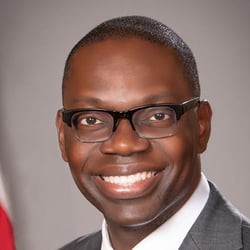 | - **Website:** [https://garlingilchrist.com](https://garlingilchrist.com) - **Current Job:** State of Michigan - **Job Title:** Lieutenant Governor - **Age:** 44 - **Date of Birth:** 9/25/1982 - **City:** Detroit - **County:** Wayne |
| --- | --- |
[facebook-f icon](https://www.facebook.com/GarlinGilchristII) [Follow us on LinkedIn](https://www.linkedin.com/in/garlinii/) [Follow us on TikTok](https://www.tiktok.com/@garlingilchristmi) [Follow us on Blue Sky](https://bsky.app/profile/garligilchrist.bsky.socialn)
#### Hear from Garlin Gilchrist
How to Protect Democracy and Build Credibility with Lieutenant Governor Garlin Gilchrist (July 30, 2026). **Watch Below** | [Download the Transcript](https://michwomen.com/hubfs/documents/transcript-garlin-gilchrist-the-newdeal-2026-07-30.txt)
**Top priorities he names**
- Protect Michiganders' voter data and privacy — his signature issue. Specifically names the Trump administration's data-sharing demands and "Big Tech" companies imposing data centers on communities. Points to his software engineering background (Microsoft, two tech companies he started and sold) as uniquely qualifying him to spot and block these threats.
- Make voting easy, secure, and convenient for every eligible Michigander — "I want to open that door wide to everyone." Emphasizes the Secretary of State as the "front door" to experiencing Michigan: getting your ID, your driver's license, your state park pass, and your voice as a voter.
- Push back against voter suppression efforts — specifically names SAVE Act documentation requirements as making it harder for married women and rural voters to register, and calls federal attempts to nationalize elections "literally voter suppression."
- Connect voting rights to economic concerns — frames the SOS role as the tool that allows Michiganders to fix everything else: Medicaid cuts, childcare costs, price gouging. "This voting system is what we use to fix the systems that fail us."
- Campaign finance accountability — advocates for reform legislation and transparency in how political money flows in Michigan elections.
**Tone**
Relational and mission-driven. Gilchrist leads with community and connection rather than résumé — he's most at home in the "here's what I've seen on the road, here's why it matters" frame. Uses concrete storytelling (the Northern Michigan restaurant owner who "wanted to hate me") to make the case that showing up and listening builds credibility across partisan lines. Warm, grounded, and consistently circles back to the idea that the SOS office is a door — and his job is to open it wider for everyone.
**Contrast/attack lines**
- Frames Republicans broadly as "literally fighting every day to make it harder for some people to vote" — doesn't name Forlini directly in this interview but characterizes the MAGA approach as wanting a smaller electorate.
- Points to his unique credential: "There are no other software developers serving in statewide elected office anywhere in this country but me" — uses this to argue he can't be fooled by technically sophisticated data exploitation attempts.
#### Top Priorities from Official Website
The priorities below are drawn from the candidate's official campaign website and reflect the issues the campaign specifically chose to emphasize.
- Protect voter data and privacy from federal data-sharing requests and "Big Tech" overreach
- Continue modernizing licensing, registration, and branch-office services statewide
- Hold companies accountable for auto repair scams
- Push back on federal efforts to "nationalize" election administration and preserve state control over Michigan's elections
- Says "vanishingly few" noncitizens actually vote, but supports holding anyone who does accountable "to the fullest extent of the law"
- Advocate for campaign finance reform legislation
#### Endorsements
Won the Democratic nomination outright on the first ballot at the April 19, 2026 convention in Detroit, defeating Ingham County Clerk Barb Byrum and former Lottery Commissioner Suzanna Shkreli. The convention was the largest in Michigan Democratic Party history, with more than 7,000 delegates in attendance.
**Labor:** United Auto Workers; Michigan AFL-CIO; Michigan Education Association; Michigan Nurses Association; American Federation of Teachers Michigan; Laborers' International Union of North America Michigan; Northwest Midwest Regional Council of Carpenters; UNITE HERE Local 24; United Association Locals 85, 333, 370, 636, and 671
**Elected officials:** U.S. Rep. Rashida Tlaib; Mayor of Dearborn Abdullah Hammoud; former Deputy Secretary of State Aghogho Edevbie (following his withdrawal from the race)
**Organizations:** End Citizens United; Equality Michigan; Reproductive Freedom for All; 12th and 13th Congressional District Democratic Parties
**Notable non-endorsement:** Gov. Gretchen Whitmer publicly declined to endorse in the Secretary of State race.
#### Career
- Lieutenant Governor of Michigan since 2019, serving under Gov. Gretchen Whitmer; has visited all 83 Michigan counties at least three times
- Ran for Detroit City Clerk in 2017, losing to longtime Clerk Janice Winfrey by fewer than 1,500 votes
- Worked as a software engineer at Microsoft, where he helped build SharePoint; later served as the City of Detroit's Director of Innovation, where he created the Improve Detroit app
- Founded and sold two technology companies
- Served as the director of new media at the Center for Community Change and as the national campaign director of MoveOn.org before returning to Detroit
- Briefly ran for governor in 2026 before switching to the Secretary of State race in January
#### Personal
- Born September 25, 1982; grew up in metro Detroit
- Graduate of the University of Michigan, bachelor's degress in engineering & computer science
- His mother worked at General Motors for 32 years, and his father worked in defense contract management for the U.S. Department of Defense
- If elected, would be only the second Black Secretary of State in Michigan's history, after Richard H. Austin (1971–1995)
#### Race Notes
Gilchrist has criticized Forlini in sharp terms, at one point calling him a "MAGA extremist" who would "weaponize voters' private data." Forlini responded by pointing to Detroit News reporting that Gilchrist has attended only about 6% of his presiding duties over the Michigan Senate as lieutenant governor, contrasting it with his own attendance record as a state representative. Both lines of attack are about character and performance rather than substantive policy disputes, and voters can weigh them as they see fit.
\[[Back to Top](https://michwomen.com/blog/michigan-secretary-of-state-race-2026-voter-guide#toc)\]
---
### Republican Endorsed: Anthony Forlini (R)
The Michigan Republican Party held its early endorsement convention on March 28, 2026, where Anthony Forlini received 55% of delegate votes, defeating fellow Republicans Monica Yatooma (25%) and Amanda Love (19%).
| 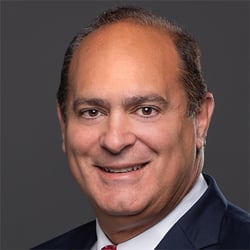 | - **Website:** [https://forliniforus.com/](https://forliniforus.com/) - **Current Job:** Macomb County - **Job Title:** Clerk - **Age:** 64 - **Date of Birth:** 02/04/1962 - **City:** Harrison Township - **County:** Macomb |
| --- | --- |
[facebook-f icon](https://www.facebook.com/AnthonyForliniForUs) [Follow us on LinkedIn](https://www.linkedin.com/in/anthony-forlini-46b61917/) [Follow us on Instagram](https://www.instagram.com/tonyforlini/) [Follow us onTwitter](https://x.com/tonyforlini1) [Follow us on YouTube](https://www.youtube.com/user/forlini32)
#### Hear from Anthony Forlini
Anthony Forlini talks vying for Michigan Secretary of State (July 21, 2026). **Watch Below** | [Download the Transcript](https://michwomen.com/hubfs/documents/transcript-anthony-forlini-cbs-detroit-2026-07-21.txt)
**Top priorities he names**
- Transparency in elections — expand Macomb's approach statewide: publish ballot images online, show the public how tabulators work, use watermarked ballot paper and hash validation so anyone can verify election software hasn't been tampered with. "People are looking for transparency. They're looking for leadership."
- Branch office efficiency — bring Macomb's four-minute average wait time and 98% phone answer rate to the state level. "You shouldn't have to take the whole day out to go to the Secretary of State's office."
- Noncitizen voter roll cleanup — wants local clerks to have access to federal citizenship databases like SAVE, and to actively compare voter rolls against noncitizen indicators. Says the problem "needs to be stopped."
- Voter ID — supports requiring photo ID to vote. "We all do IDs for just about anything. This is a very sacred thing, being able to vote. Let's not bastardize it by not getting IDs."
- Bipartisan accountability — describes Macomb as a "purple county" where Democrats and Republicans "get along just fine as long as we're doing the right thing." Says he holds his own party accountable the same as anyone else.
**Tone**
Operational and experience-first. Forlini leads with his record as Macomb County Clerk — specific metrics, specific programs, specific results. Low heat throughout; the consistent frame is that he's already solved these problems locally and is ready to scale the solutions. Comfortable discussing technical election administration details (hash validation, ballot imaging) in plain language. Presents himself as nonpartisan in practice even while running as a Republican.
**Contrast/attack lines**
- Names experience as his clearest differentiator: "I've had the experience of running elections. I've got the experience of being in the legislature. I've got the experience of being locally elected and as a business owner."
- On Trump's voter fraud allegations, carefully threads the needle: "I believe in making our elections safe and accurate and whatever it takes — I shouldn't say whatever it takes — we're going to do it within the law."
#### Top Priorities from Official Website
The priorities below are drawn from the candidate's official campaign website and reflect the issues the campaign specifically chose to emphasize.
- Require government verification of voter citizenship, rather than relying on self-attestation alone
- Clean up Michigan's voter rolls and expand local clerks' access to federal citizenship-verification tools like the SAVE database
- Provide additional training and resources for local election workers
- Modernize branch-office and vehicle-registration services, framed around reducing bureaucracy and cutting wait times
- Increase transparency and oversight of vote tabulation, including publishing ballot images and demonstrating tabulator operations publicly
- Has teamed up with Americans for Citizen Voting, the group behind the proof-of-citizenship ballot initiative that did not qualify for the November 2026 ballot
#### Endorsements
Won the Republican nomination on the first ballot at the March 28, 2026 convention with 55% of the vote, defeating Monica Yatooma (25%) and Amanda Love (19%).
Notable endorsements include Candice Miller — former Michigan Secretary of State (1995–2003), longtime U.S. Representative for Michigan's 10th District, and current Macomb County Public Works Commissioner — who backed Forlini at the time of his candidacy announcement.
#### Career
- Macomb County Clerk since 2021, reelected in 2024
- Served in the Michigan House of Representatives, 2011–2016
- Supervisor of Harrison Township, 2004–2010
- Ran unsuccessfully for Michigan's 10th Congressional District in 2016
- As clerk, conducted a forensic audit of the 2020 election in Macomb County that found no outside interference, and introduced watermarked ballot paper and tabulator hash validation to verify election software integrity; also published ballot images online for public review
- Business owner for over 35 years, working as a certified financial planner, and also worked as district director for U.S. Rep. Paul Mitchell.
#### Personal
- Born February 4, 1962; lifelong resident of Macomb County, currently in Harrison Township
- Graduate of Western Michigan University
- Father immigrated from Italy; describes that background as motivating his public service
- Married to Diane Forlini; they have three adult children and four grandchildren
#### Race Notes
Forlini has drawn national attention for his noncitizen-voter claims in Macomb County. In January, he compared the county's voter rolls to a list of people who had claimed noncitizen status to get out of jury duty, initially flagging 15 names. A state review later found that of those 15, several were eligible citizens, several were confirmed noncitizens (some already removed from the rolls), and a few remained under review.
In May, Forlini told Votebeat he had identified additional names by informally collaborating with federal officials who have access to the SAVE citizenship database, though he said he did not have direct access himself and could not specify which federal agency he was working with. In June, Votebeat reported that Homeland Security Investigations had subpoenaed Macomb County in January for "all available information" on noncitizen voters as part of an active federal investigation — a Michigan Department of State spokesperson said she was not aware of any other Michigan county receiving a similar subpoena.
Forlini's supporters see this as diligent oversight; critics, including Secretary of State Benson, have called some of his claims overstated and warned that comparing jury-duty exemptions to voter rolls is a known source of false positives, since people can share similar or identical names and addresses.
\[[Back to Top](https://michwomen.com/blog/michigan-secretary-of-state-race-2026-voter-guide#toc)\]
---
### Other Candidates on the November Ballot
Three candidates from smaller parties also appear on the November ballot, listed below in alphabetical order. Detailed background information for these candidates was not available at the time of this update, and Michigan Women will add positions and background as they become available. For their campaign finance filings, see the campaign finance section below.
- **Scott Aughney (U.S. Taxpayers)** — Michigan Center, Jackson County
- **Eric Borregard (Green)** — Dexter, Washtenaw County
- **Christine Sloan (Libertarian)** — Brighton, Livingston County. Campaign website: [https://votechristinesloan.com/](https://votechristinesloan.com/)
\[[Back to Top](https://michwomen.com/blog/michigan-secretary-of-state-race-2026-voter-guide#toc)\]
---
## How the Money is Flowing: Campaign Finance Overview
Fundraising plays a smaller role in this race than in the governor's race — neither candidate had to win a primary, only convince convention delegates. The most recent filings reviewed for this update are Gilchrist's pre-election campaign statement, covering January 1 through August 13, 2026 (filed August 18), and Forlini's post-election campaign statement, covering August 7 through September 11, 2026 (filed September 19). The two statements cover different periods, so the balances below are not from the same date.
**Note:** Michigan campaign finance law caps individual contributions at $8,325 per election. Candidates may also loan their own campaigns unlimited amounts.
| Candidate | Party | Committee Name | Cash on Hand (most recent filing reviewed) |
| --- | --- | --- | --- |
| Garlin Gilchrist | Democrat | Garlin Gilchrist for Michigan\* | $1,035,459.91 (as of 8/13/2026)\* |
| Anthony Forlini | Republican | CTE Anthony G Forlini | $391,030.32 (as of 9/11/2026) |
| Christine Sloan | Libertarian | Christine Sloan for Secretary of State | No campaign statement in filings reviewed\*\* |
| Scott Aughney | U.S. Taxpayers | Scott Aughney for MISOS | No campaign statement in filings reviewed\*\* |
| Eric Borregard | Green | Committee to Elect Eric Borregard MI Secretary of State | Reporting waiver approved 8/17/2026\*\* |
Source: Michigan Bureau of Elections, mi-boe.entellitrak.com. Figures reflect the most recent filings reviewed as of September 27, 2026.
Forlini's post-election statement, filed September 19, 2026, reports $128,514.34 in receipts and $34,087.46 in expenditures for the period August 7 through September 11, 2026, leaving an ending balance of $391,030.32 and no outstanding debts.
\*Gilchrist's financial picture is split across two committees because of his January 2026 switch from the governor's race. His original committee, "Garlin Gilchrist for Governor," held $262,764.24 as of December 31, 2025 — down from $378,457.17 three months earlier, reflecting wind-down spending before the switch. His Secretary of State committee, "Garlin Gilchrist for Michigan," was organized January 12, 2026. Its pre-election statement reports a closing balance of $1,035,459.91 as of August 13, 2026. The committee has since filed several late contribution reports, including one listing three contributions totaling $9,200 received on August 26; those reports list contributions only and are not reflected in that balance. A post-election statement for the committee was not among the filings reviewed. Michigan campaign finance rules generally allow candidates to transfer funds between their own committees when switching races.
\*\*The three minor-party candidates have registered committees with the Bureau of Elections. Sloan's committee filed its statement of organization on July 15, 2026, and Aughney's filed statements of organization on July 29 and August 18, 2026; no campaign statements appeared in the filings reviewed for either. Borregard's committee was assigned an ID on March 5, 2026, and the Bureau approved a reporting waiver on August 17, 2026. Under Michigan rules, a committee whose contributions, loans, and expenditures stay below $1,000 can request a waiver from filing full campaign statements.
Outside spending in this race is modest compared to the governor's race. You can search all registered political committees active in the SOS race at [https://mi-boe.entellitrak.com/](https://mi-boe.entellitrak.com/). For a plain-language explanation of how PACs work and why they matter, read our guide: [What Are Political Committees (PACs) in Elections](https://michwomen.com/blog/what-are-political-committees-pacs-in-elections).
\[[Back to Top](https://michwomen.com/blog/michigan-secretary-of-state-race-2026-voter-guide#toc)\]
---
## What Happens After Election Day
After the election is certified, the secretary of state-elect begins preparing to take office by assembling a transition team, selecting division directors and senior staff, and setting operational priorities for the new administration. The secretary of state-elect also works with the outgoing administration to ensure an orderly transfer of responsibilities across the office's many divisions — elections, motor vehicle services, business records, and campaign finance.
Michigan's secretary of state is sworn into office on January 1 following the election. The secretary of state serves a four-year term and may serve a maximum of two terms (eight years) under Michigan's constitutional term limits.
A new secretary of state can begin shaping the office immediately by directing enforcement priorities, establishing new voter access policies, adjusting branch office operations, and deciding how to handle pending policy questions — including whether to cooperate with or resist federal data-sharing demands, how to implement any voter-approved constitutional amendments, and what changes to make to the campaign finance reporting system. Many of these decisions can have lasting effects on how Michigan's elections are run and how accessible government services are for residents long after a single term ends.
**Learn more**
- Michigan Constitution of 1963, Article V (Executive Branch): [https://www.legislature.mi.gov/documents/publications/Constitution.pdf](https://www.legislature.mi.gov/documents/publications/Constitution.pdf)
- Michigan Secretary of State's Office: [https://www.michigan.gov/sos](https://www.michigan.gov/sos)
\[[Back to Top](https://michwomen.com/blog/michigan-secretary-of-state-race-2026-voter-guide#toc)\]
---
## Who Is the Secretary of State Now?
### Current Secretary of State: Jocelyn Benson (D)
| 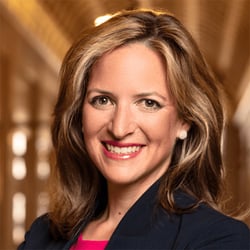 | - **Website:** [https://www.michigan.gov/sos](https://www.michigan.gov/sos) - **Current Job:** State of Michigan - **Job Title:** Secretary of State - **Age:** 48 - **Date of Birth:** 10/22/1977 - **City:** Detroit - **County:** Wayne |
| --- | --- |
Jocelyn Benson, Michigan's current Secretary of State, is term-limited and cannot seek reelection in 2026 after serving the maximum two four-year terms. As a result, the office will be open in the next election cycle.
Benson has announced that she is [running for governor](https://michwomen.com/blog/2026-candidates-for-michigan-governor), shifting her focus from election administration to a statewide executive campaign. Her decision to pursue the governorship is one reason the 2026 Secretary of State race is drawing early attention, as it marks a leadership transition in an office that plays a central role in Michigan elections and public records.
**How Long is the Term and Term Limits**
- **Term length:** 4 years
- **Term limits:** 2 terms (8 years total)
- **Next Election:** November 3, 2026
\[[Back to Top](https://michwomen.com/blog/michigan-secretary-of-state-race-2026-voter-guide#toc)\]
---
## What Does the Secretary of State Do?
The Michigan Secretary of State is one of the state's most important administrative offices — think of it as the operational backbone of Michigan's democracy and public services. The role doesn't make laws, but it determines how smoothly elections run, how accessible government services are, and whether the public can actually see who's funding political campaigns.
#### Oversee elections.
The Secretary of State administers statewide elections, certifies results, and provides guidance to the local clerks who run things at the county and township level. When election laws change — through legislation or ballot initiative — this office is responsible for putting them into practice.
#### Manage voter access and registration.
The office maintains Michigan's statewide voter rolls, oversees the voter registration system, and works to ensure that eligible residents can participate in elections. How this is managed — and how aggressively the office works to expand or protect access — is often one of the central debates in SOS races.
#### Run Michigan's driver and vehicle services.
This is the part most residents interact with directly. The Secretary of State oversees driver's licenses, state IDs, vehicle titles, registrations, and license plates. It also operates branch offices across the state and online services — and wait times and efficiency have become significant political issues in recent cycles.
#### Maintain public and business records.
The office registers businesses and nonprofits, maintains official state records and filings, and oversees campaign finance and lobbying disclosures. If you've ever looked up who donated to a political campaign or verified a business registration, you've used this office's work.
#### Enforce transparency and compliance.
The Secretary of State administers campaign finance reporting systems and ensures that political committees and candidates file required disclosures on time. This function makes it possible for the public to follow the money in Michigan politics — and how seriously the office takes enforcement matters a great deal.
The scope of the office means the Secretary of State's priorities and approach have real consequences — whether that's how easy it is to register to vote, how long you wait at a branch office, or how visible political spending is to ordinary residents.
\[[Back to Top](https://michwomen.com/blog/michigan-secretary-of-state-race-2026-voter-guide#toc)\]
---
## What Has the Secretary of State Been Doing?
The Michigan Secretary of State is the state's chief election and administrative officer — the person who decides how Michigan's voter rolls are maintained, which services get modernized, and how aggressively the office pushes back against external pressure. The examples below highlight some of the major actions taken by Secretary of State Jocelyn Benson's office over the past year. They are intended to illustrate how the office operates in practice and are not a complete list of every action taken. Whenever possible, links are provided to official government sources so you can review the original documents yourself.
#### Voter Data Protection Lawsuits
In June 2026, Michigan Attorney General Dana Nessel secured two major legal victories protecting Michigan's election administration from federal interference. The U.S. Court of Appeals for the Sixth Circuit dismissed a Department of Justice lawsuit that had sought to compel Michigan to turn over sensitive voter information. A separate ruling from the U.S. District Court for the District of Massachusetts blocked a related federal attempt to access Michigan voter data. Both decisions were the result of Benson's office working with the AG to resist what they characterized as unlawful federal demands for voter information — the same type of data-sharing demands that Gilchrist has made a central campaign issue.
Official source: [AG Nessel Secures Two Major Victories Defending State Elections](https://www.michigan.gov/ag/news/press-releases/2026/06/24/ag-nessel-secures-two-major-victories)
#### Branch Office Modernization
Under Benson, the Secretary of State's office doubled its online service offerings, installed more than 100 self-service stations at branch locations statewide, and launched mobile offices to serve underserved and rural communities that lack easy access to a branch location. These changes reduced wait times significantly in many locations, though branch office efficiency remains a contested issue — Forlini has pointed to Macomb County's four-minute average wait as evidence that the state still has room to improve.
Official source: [Michigan Secretary of State — Office Services](https://www.michigan.gov/sos)
#### License Plates for Historically Black Fraternities and Sororities
In June 2026, the Secretary of State's office announced the launch of special license plates honoring five historically Black fraternities and sororities — the Alpha Phi Alpha, Kappa Alpha Psi, Omega Psi Phi, Alpha Kappa Alpha, and Delta Sigma Theta organizations. The plates are available for purchase through the standard specialty plate process.
Official source: [Michigan Secretary of State — Special Plates](https://www.michigan.gov/sos/0,4670,7-127--642779--,00.html)
#### Michigan Voting Rights Act
In June 2026, the Michigan Senate passed a state-focused Voting Rights Act that Benson's office had publicly supported. The legislation established state-level protections for voting rights at a time when the federal Voting Rights Act has faced significant legal erosion. The bill passed along party lines with Democrats in support; its ultimate fate depends on the full legislative process.
Official source: [Michigan Advance — Michigan Senate passes state Voting Rights Act](https://michiganadvance.com/2026/06/michigan-senate-passes-state-voting-rights-act/)
#### Firewall Policy for Election Oversight
In May 2026, Benson announced a formal "firewall" policy — developed with the nonpartisan Election Reformers Network — under which she recuses herself from all decisions and administrative tasks that directly affect the gubernatorial race she is competing in. The nonpartisan Bureau of Elections handles those functions independently and does not share its work with Benson until decisions are finalized. Republican candidates and legislators have questioned whether this policy is sufficient; Benson has defended it as consistent with how past secretaries of state in both parties have handled similar situations.
Official source: [Michigan Secretary of State — Office News](https://www.michigan.gov/sos)
#### Explore More
Review official documents and announcements from the Secretary of State's Office:
- SOS Newsroom — [https://www.michigan.gov/som/minewswire](https://www.michigan.gov/som/minewswire)
- Voter Information — [https://mvic.sos.state.mi.us/](https://mvic.sos.state.mi.us/)
- Campaign Finance Portal — [https://mi-boe.entellitrak.com](https://mi-boe.entellitrak.com/)
\[[Back to Top](https://michwomen.com/blog/michigan-secretary-of-state-race-2026-voter-guide#toc)\]
---
## What to Look for in a Michigan Secretary of State
Once you understand what the office does, the next question is: what kind of experience and leadership help someone do the job well? Because the Secretary of State primarily has an administrative and oversight role, a candidate's management ability and operational judgment matter enormously — but so does their commitment to keeping elections accessible, transparent, and trustworthy.
#### Operational leadership.
The Secretary of State oversees one of the largest service delivery operations in state government — branch offices, online systems, vehicle services, and statewide election infrastructure. A strong candidate has real experience running complex organizations, managing large teams, and delivering services to the public at scale.
#### Election administration knowledge.
Elections don't run themselves. The SOS provides guidance and oversight to the hundreds of local clerks who actually administer elections at the county and township level. Familiarity with how that system works — and the legal, logistical, and political pressures it operates under — is foundational to doing the job well.
#### Transparency and compliance mindset.
The office administers campaign finance reporting, lobbying disclosures, and public records systems that make Michigan's political process visible to ordinary residents. A candidate's track record of following rules, disclosing information accurately, and protecting the integrity of those systems tells you a lot about how they'd run the office.
#### Clear communication under pressure.
Elections are high-stakes, high-attention moments. The Secretary of State is often asked to explain complex processes — ballot procedures, certification timelines, voter roll maintenance — calmly, accurately, and consistently, sometimes while facing significant public scrutiny. The ability to communicate clearly under pressure matters.
#### Role clarity.
The SOS operates within firm legal boundaries set by Michigan law, court decisions, and voter-approved policies. Understanding what the office can and cannot do — and respecting those limits even when they're inconvenient — is a meaningful signal about how a candidate would govern.
#### Service delivery focus.
For most Michiganders, the Secretary of State means one thing: the branch office where you get your license or renew your plates. A candidate's commitment to improving that experience — wait times, online access, efficiency — reflects their approach to the job's most visible responsibility.
#### Collaboration and independence.
The SOS works alongside the governor's office, the legislature, local clerks, the courts, and the federal government. The ability to collaborate across those relationships — while maintaining independence and impartiality on election-related matters — is one of the more nuanced demands of the role.
#### Ethical track record.
Perhaps more than most statewide offices, the SOS is expected to model the integrity it oversees. A candidate's personal and professional ethical record deserves serious scrutiny — including their record of disclosing information accurately, complying with the rules they'd be responsible for enforcing, and handling public trust carefully.
\[[Back to Top](https://michwomen.com/blog/michigan-secretary-of-state-race-2026-voter-guide#toc)\]
---
## Dropped Out and Unendorsed Candidates
### Unendorsed Candidates
#### Barb Byrum (D)
| 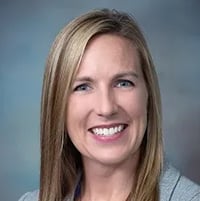 | - **Website:** [https://barbbyrum.com/](https://barbbyrum.com/) - **Current Job:** Ingham County - **Job Title:** Clerk - **Age:** 48 - **Date of Birth:** 11/10/1977 - **City:** \[Not confirmed\] - **County:** Ingham |
| --- | --- |
[facebook-f icon](https://www.facebook.com/ByrumforClerk/) [Follow us on LinkeIn](https://www.linkedin.com/in/barb-byrum-a701a6259/) [Follow us on Instagram](https://www.instagram.com/barbbyrumMI/) [Follow us on TikTok](https://www.tiktok.com/@barbbyrum) [Follow us on YouTube](https://www.youtube.com/channel/UCcYPknbIOz_E4eRQMWZCCLw)
Byrum did not receive the Democratic endorsement at the April 19 convention, where Garlin Gilchrist was endorsed. Following the convention, Byrum raised concerns about the process itself — specifically the use of electronic voting and a reported instance of a delegate voting from home rather than in person. She called for the convention to use paper ballots and renewed her support for moving SOS nominations to a primary election, saying she supports a primary only if it happens earlier in the year, arguing that an August primary would disadvantage candidates on fundraising and messaging.
#### Suzanna Shkreli (D)
| 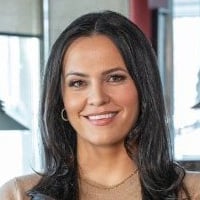 | - **Website:** [https://suzannashkreli.com/](https://suzannashkreli.com/) - **Former Job:** Michigan Lottery (Resigned to run for SOS) - **Job Title:** Former Commissioner - **Age:** — - **Date of Birth:** — - **City:** — - **County:** Oakland |
| --- | --- |
[facebook-f icon](https://www.facebook.com/SuzannaShkreliForMI) [Follow us on LinkedIn](https://www.linkedin.com/in/suzanna-shkreli-58271a39/) [Follow us on Instagram](https://www.instagram.com/suzanna_shkreli/) [Follow us on X](https://x.com/SuzannaForMI) [Follow us on Blue Sky](https://bsky.app/profile/suzanna-shkreli.bsky.social) [Follow us on Threads](https://www.threads.com/@suzanna_shkreli)
#### Monica Yatooma (R)
|  | - **Website:** [https://monicaformichigan.com/](https://monicaformichigan.com/) - **Current Job:** GEIA - **Job Title:** Director of Development and Strategic Partnerships - **Age:** 38 - **Date of Birth:** 1987 - **City:** Commerce Township - **County:** Oakland |
| --- | --- |
[facebook-f icon](https://www.facebook.com/MonicaYatooma) [Follow us on LinkedIn](https://www.linkedin.com/in/monica-yatooma-0746672a0/) [Follow us on Iinstagram](https://www.instagram.com/monicayatooma_official/)
#### Amanda Love (R)
| 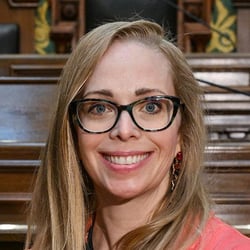 | - **Website:** [https://www.loveformi.net/](https://www.loveformi.net/) - **Current Job:** \[Can't find\] - **Job Title:** \[Can't find\] - **Age:** — - **Date of Birth:** — - **City:** Independence Township - **County:** Oakland |
| --- | --- |
[facebook-f icon](https://www.facebook.com/p/Amanda-Love-for-Secretary-of-State-61579794841007/)
#### Timothy Smith (R)
|  | - **Website:** [https://smith4secretary.com/](https://smith4secretary.com/) - **Current Job:** Gentex - **Job Title:** \[Can't find\] - **Age:** — - **Date of Birth:** — - **City:** — - **County:** Muskegon |
| --- | --- |
[facebook-f icon](https://www.facebook.com/smith4secretary) [Follow us on Instagram](https://www.instagram.com/smith4secretary/) [Follow us on X](https://x.com/Smith4secretary) [Follow us on TikTok](https://www.tiktok.com/@smith4secretary)
### Dropped Out Candidates
#### Adam Hollier (D)
|  | - **Website:** [https://adamhollier.com/](https://adamhollier.com/) - **Current Job:** Army Reserves, Former MI State Senator - **Job Title:** Team Chief and Paratrooper, 412th Civil Affairs Battalion - **Age:** 41 - **Date of Birth:** 09/26/1985 - **City:** Detroit - **County:** Wayne |
| --- | --- |
[facebook-f icon](https://www.facebook.com/adamholliersr) [Follow us on LinkedIn](https://www.linkedin.com/in/ahollier/) [Follow us on Instagram](https://www.instagram.com/Adamholliersr) [Follow us on X](https://x.com/adamholliersr)
#### Aghogho Edevbie (D)
| 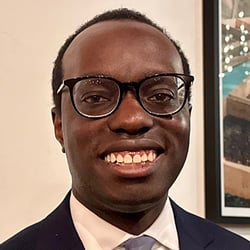 | - **Website:** [https://aghogho.com/](https://aghogho.com/) - **Current Job:** State of Michigan - **Job Title:** Deputy Secretary of State - **Age:** 39 - **Date of Birth:** 07/27/1987 - **City:** Detroit - **County:** Wayne |
| --- | --- |
[facebook-f icon](https://www.facebook.com/aghoghoedevbie) [Follow us on LinkedIn](https://www.linkedin.com/in/aghoghoedevbie/) [Follow us on Instagram](https://www.instagram.com/aghoghoedevbie) [Follow us on TikTok](https://www.tiktok.com/@aghogho.edevbie) [Follow us on Blue Sky](https://bsky.app/profile/aghoghoedevbie.bsky.social)
\[[Back to Top](https://michwomen.com/blog/michigan-secretary-of-state-race-2026-voter-guide#toc)\]
---
## How to Vote in Michigan
Knowing who's running is only half the equation. Here's how to make sure your vote actually counts on November 3rd.
#### Look up your personal voter information
The [Michigan Voter Information Center](https://mvic.sos.state.mi.us/) has everything you need in one place. Enter your information at mvic.sos.state.mi.us, and you'll see:
- Whether you're registered to vote
- Your polling location on Election Day
- Your early voting location and hours
- Your absentee ballot status
- Your drop box locations
- All of your voting districts — county, state house, state senate, U.S. Congress, school board, and more
- Your local clerk's contact information
#### Key dates
- General Election: November 3, 2026
- Absentee ballots became available September 24
- October 19: last day to register to vote online
- Early voting is available — check the MVIC site for your specific location and hours
- Michigan allows same-day voter registration at your local clerk's office
Not registered? You can register online at [mvic.sos.state.mi.us](https://mvic.sos.state.mi.us/) if you have a Michigan driver's license or state ID, by mail, or in person at your local clerk's office. If you're registering within 14 days of an election, you must do so in person.
*Voter information is maintained by the Michigan Secretary of State. Contact your local clerk if you have questions about your specific situation.*
\[[Back to Top](https://michwomen.com/blog/michigan-secretary-of-state-race-2026-voter-guide#toc)\]
---
## Help Build a More Informed Michigan
Democracy works best when every voter has access to clear, factual, and nonpartisan information.
If you found this guide helpful, you can help make sure the next voter finds it too.
Your support helps Michigan Women research statewide races, publish free voter guides, explain complex ballot issues, interview candidates, and expand civic education into more Michigan communities — all without subscriptions or paywalls.
#### Ways to Support
##### Donate
Help keep these guides free and available to every Michigan voter. [https://michwomen.com/donate](https://michwomen.com/donate)
##### Subscribe
Join our email list to receive new voter guides, election updates, and civic education resources. [https://michwomen.com/join](https://michwomen.com/join)
##### Follow Michigan Women
Stay connected for new guides, interviews, videos, and election coverage.
- Facebook: [https://www.facebook.com/michwomencoalition/](https://www.facebook.com/michwomencoalition/)
- LinkedIn: [https://www.linkedin.com/company/michigan-women](https://www.linkedin.com/company/michigan-women)
- YouTube: [https://www.youtube.com/@MichiganWomen](https://www.youtube.com/@MichiganWomen)
- TikTok: [https://www.tiktok.com/@michwomen](https://www.tiktok.com/@michwomen)
- Instagram: [https://www.instagram.com/michigan\_women/](https://www.instagram.com/michigan_women/)
- Nextdoor: [https://nextdoor.com/pages/michigan-women-saginaw-mi/](https://nextdoor.com/pages/michigan-women-saginaw-mi/)
##### Share This Guide
Help friends, family, and neighbors make informed decisions by sharing this guide.
#### Michigan Women Education Fund
Michigan Women Education Fund is a registered 501(c)(3) nonprofit organization. Contributions are tax-deductible to the extent allowed by law.
Together, we can help every Michigan voter make a more informed decision at the ballot box.
\[[Back to Top](https://michwomen.com/blog/michigan-secretary-of-state-race-2026-voter-guide#toc)\]
---
**Content Disclaimer:** Our team researches information from official websites, news outlets, and other public resources to make it easier for Michigan residents to stay informed. We strive to provide accurate, balanced, and up-to-date information, but we may occasionally miss updates or changes. Michigan Women is a 501(c)(3) non-profit organization and does not support or oppose any political candidate or party. This content is intended solely for civic education and public awareness.
[Voter Guide](https://michwomen.com/blog/tag/voter-guide)
## Related posts
[](https://michwomen.com/blog/michigan-attorney-general-race-2026-voter-guide)
[Voter Guide](https://michwomen.com/blog/tag/voter-guide)
## [Michigan Attorney General Race 2026 Voter Guide](https://michwomen.com/blog/michigan-attorney-general-race-2026-voter-guide)
Last Update: Septebmer 27, 2026. Eli Savit vs. Doug Lloyd: who should be Michigan's top cop? A...
[Read more](https://michwomen.com/blog/michigan-attorney-general-race-2026-voter-guide)
[](https://michwomen.com/blog/2026-candidates-for-michigan-us-senate)
[Voter Guide](https://michwomen.com/blog/tag/voter-guide)
## [Michigan U.S. Senate Race 2026 Voter Guide](https://michwomen.com/blog/2026-candidates-for-michigan-us-senate)
Last Update: September 27, 2026. The primary is over — Abdul El-Sayed and Mike Rogers are...
[Read more](https://michwomen.com/blog/2026-candidates-for-michigan-us-senate)
[](https://michwomen.com/blog/how-michigan-chooses-nominees-for-statewide-offices)
[How Government Works](https://michwomen.com/blog/tag/how-government-works)
## [How Michigan Chooses Nominees for Statewide Offices](https://michwomen.com/blog/how-michigan-chooses-nominees-for-statewide-offices)
Last Update: June 18, 2026. Learn how Michigan selects nominees for key statewide offices through...
[Read more](https://michwomen.com/blog/how-michigan-chooses-nominees-for-statewide-offices)
[Follow us on LinkedIn](https://www.linkedin.com/company/michigan-women) [facebook-f icon](https://www.facebook.com/michwomencoalition/) [Follow us on YouTube](https://www.youtube.com/@MichiganWomen) [Follow us on TikTok](https://www.tiktok.com/@michwomen) [Follow us on Facebook](https://www.instagram.com/michigan_women/) [Follow us on Facebook](https://nextdoor.com/pages/michigan-women-saginaw-mi/)
Copyright ©2026 | michwomen.com | [Contact Us](https://michwomen.com/contact?hsLang=en) | [Privacy Policy](https://michwomen.com/privacy-policy)
```json
{
"@context" : "https://schema.org",
"@type" : "BlogPosting",
"author" : {
"@type" : "Person",
"name" : "Krista Moon",
"url" : "https://michwomen.com/blog/author/krista-moon"
},
"dateModified" : "2026-09-28T03:45:21.896Z",
"datePublished" : "2025-10-16T17:52:08.000Z",
"headline" : "Michigan Secretary of State Race 2026 Voter Guide",
"image" : [ "https://michwomen.com/hubfs/michigan-secretary-of-state-race-2026-voter-guide-1260x630px.jpg" ],
"mainEntityOfPage" : {
"@id" : "https://michwomen.com/blog/michigan-secretary-of-state-race-2026-voter-guide",
"@type" : "WebPage"
},
"publisher" : {
"@type" : "Organization",
"logo" : {
"@type" : "ImageObject",
"url" : "https://michwomen.com/hubfs/images/branding/michigan-women-logo.svg"
},
"name" : "Michigan Women"
}
}
```