
Michigan State Government
How Michigan's Three Branches of Government Work Together

1. Executive
Branch
The Governor, Attorney General & Secretary of State
Enforces laws and leads the state government.



Gretchin Whitmer
Democrat
2019-2027
What the Executive Branch Does
Three statewide offices that lead, administer, and protect Michigan's government.
Key Responsibilities
- The Governor signs or vetoes legislation and proposes the state budget
- The Governor oversees state departments, agencies, and emergency response
- The Secretary of State manages elections, voter registration, and motor vehicle services
- The Attorney General enforces state law and represents Michigan in legal matters
- All three offices are elected statewide and serve four-year terms
Why This Role Matters
Michigan's three executive offices touch nearly every aspect of daily life — from the roads you drive on to how your vote is counted to whether state laws are fairly enforced. Each role is independently elected, meaning voters choose each one separately on Election Day.
Michigan Senate
38 State Senators
4 Year Terms | 2 Term Limit
Serves ~270,000 Residents

Senate Majority Leader
Winnie Brinks (D), 29th District | 2019-2027
What the Michigan Senate Does
Shaping the laws and budget that affect everyday life in Michigan.
Key Responsibilities
- Writes, debates, and votes on Michigan state legislation
- Reviews and approves the state budget
- Confirms certain gubernatorial appointments
- Serves as the jury in state impeachment proceedings
- Each of Michigan's 38 senators represents ~260,000 residents
Why This Role Matters
The Michigan Senate's decisions on education, healthcare, infrastructure, and the state budget directly affect communities across Michigan.
Michigan House of Representatives
110 House Reps
2 Year Terms | 6 Term Limit
Serves ~90,000-95,000 Residents
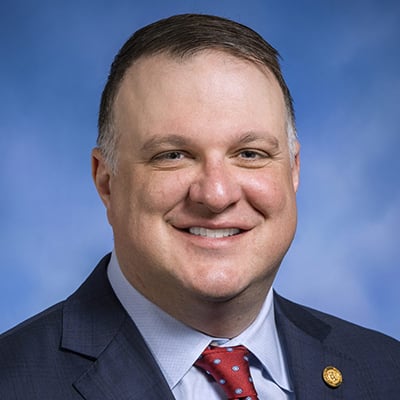
Speaker of the House
Matt Hall (R), 42nd District | 2019-2027
What the Michigan House Does
Represents the people based on population and initiates key legislation.
Key Responsibilities
- Introduces and votes on Michigan state legislation
- Originates all state budget and tax-related bills
- Initiates impeachment proceedings
- Represents the most local level of state government
- Each of Michigan's 110 representatives serves ~90,000 residents
Why This Role Matters
Because House districts are smaller, representatives are closely tied to their local communities. Most state legislation starts here before moving to the Senate.
Chief Justice

Megan Cavanagh
Serving Since 2019
What the Judicial Branch Does
Interpreting Michigan's laws and ensuring their fair and consistent application.
Key Responsibilities
- Interprets Michigan state laws and the Michigan Constitution
- Reviews lower court decisions through the appeals process
- Determines whether state laws comply with the Michigan Constitution
- Resolves disputes involving state law
- Sets legal precedent for courts across the state
- Oversees the administration of Michigan's court system
Why This Role Matters
Michigan's courts are the final word on what state laws actually mean in practice. From family law and property rights to civil liberties and criminal justice, court decisions shape how laws affect real people's lives. Unlike federal judges, Michigan's Supreme Court justices and Court of Appeals judges are elected by voters — making judicial elections an often-overlooked but important part of civic participation.