Last update: October 17, 2026. Get to know the 2026 candidates for University of Michigan Regent,...
Last update: October 29, 2026. Get to know the 2026 candidates for the Delta College Board of Trustees, learn what the board controls, and see how your vote for the Bay, Midland and Saginaw County seats counts.
This guide is designed for easy online navigation with clickable sections. If you would rather download or print a copy, use the PDF option below.
Continue to the Online Navigation 👇
Table of Contents
- About This Guide
- The Race at a Glance
- About the Delta College Board of Trustees
- What should I look for in a Delta College trustee?
- Meet the Candidates
- What happens after Election Day?
- How to Vote in Michigan
- More Articles & Resources
- Help Build a More Informed Michigan
- Key Sources
About This Guide
This guide is designed to help you understand both the office and the election—not tell you how to vote.
We begin by explaining what the office does, how much authority it has, and why it matters. From there, we cover the current race, the major issues, what to look for in a candidate, and profiles of everyone seeking the office. The goal is to provide the context you need to evaluate candidates based on the responsibilities of the job—not just campaign headlines.
Michigan Women updates these guides throughout the election cycle as new information becomes available. We review official government records, campaign websites, debate transcripts, campaign finance filings, public statements, and reporting from a wide range of reputable news organizations. New information is verified before it is added, and significant changes are incorporated as the race develops.
As a 501(c)(3) nonprofit organization, Michigan Women does not endorse or oppose candidates or political parties. Our role is to make Michigan government and elections easier to understand so every voter can make informed decisions with confidence.
To learn more about our research process, editorial standards, and commitment to nonpartisan civic education, visit our Strategy & Impact Guide.
The Race at a Glance
In 60 seconds: Voters in Bay, Midland and Saginaw counties will fill three of the nine seats on the Delta College Board of Trustees on November 3. Only the Saginaw County seat is contested: incumbent Arshen Baldwin faces Bill Azelton.
The basics
- Seats and candidates: 3 seats, 4 candidates. The Bay County and Midland County seats each have one candidate.
- Term: 6 years, January 1, 2027, through December 2032.
- Type of race: Nonpartisan, with no primary and no party labels on the ballot. All four candidates qualified by paying a filing fee.
- What's new: The Midland County seat is open because its current trustee is not on the ballot.
- VOTE: General Election: Tuesday, November 3, 2026
What is this election for?
You are choosing three trustees for the board that governs Delta College. The board has three seats for each county, and one seat from each county is on the ballot this year. A trustee must live in the county they represent, but every voter in all three counties votes on all three seats. A Saginaw Township voter, for example, will also see the Bay County and Midland County seats.
- Where to find it: Look in the nonpartisan section of your ballot, usually under a "Community College" heading. A straight-party vote does not count in nonpartisan races, so mark these yourself.
- How many to pick: Vote for one candidate for each seat.
- Races with one candidate: You can vote for that candidate or leave the race blank. Skipping a race does not affect the rest of your ballot.
- Write-ins: Write-in votes are counted only for candidates who filed a Declaration of Intent by the October 23, 2026 deadline.
Official source: Delta College Board of Trustees | Saginaw County Candidate List, November 3, 2026 | Bay County Official Candidate List, November 3, 2026
About the Delta College Board of Trustees
Why does the Delta College board matter?
The nine trustees decide what students pay, how much property tax the college levies within voter-approved limits, and who runs the college. Their decisions reach well beyond campus, into job training, local employers and household tax bills across three counties.
- Tuition: The board sets what students pay per contact hour. In 2026, it raised in-district tuition from $136 to $140.
- Property taxes: Property owners in all three counties pay a Delta College levy. For 2026, it is 2.0482 mills, or about $205 a year on a home with $100,000 in taxable value. Taxable value is often around half of a home's market value.
- Leadership: The board hires and evaluates the college president. It chose a new president in April 2026.
- Budget: The board adopted a 2026–27 budget of about $128.5 million across all college funds.
- Coming up: College staff told the board in March 2026 that Delta plans its next millage campaign for 2028. The trustees elected this fall will be on the board when that decision is made.
What is the Delta College Board of Trustees?
- What it is: The elected governing body of Delta College, the public community college at University Center, with centers in downtown Bay City, Midland and Saginaw. Trustees are unpaid volunteers.
- How it started: Voters in Bay, Midland and Saginaw counties created the tri-county college district on November 7, 1957. The board named the college Delta College on April 26, 1960.
- Legal basis: The board operates under Michigan's Community College Act of 1966, the Open Meetings Act and the Freedom of Information Act.
- Terms: Six years, with no term limits. Several past trustees served more than 20 years, including the Rev. Dr. Robert L. Emrich (1993–2022) and R. Earl Selby (1992–2018).
- Election cycle: Three seats are on the ballot every two years, in even-numbered years. New terms begin January 1 after the election.
- Officers: The board elects a chair and vice chair from among its members. The treasurer and secretary are college staff and are not trustees.
Official source: Delta College Board of Trustees | Delta College Board of Trustees Bylaws
Who's on the board now?
Seats on the November 3, 2026 ballot are in bold.
| County | Trustee | How they joined | Term ends |
|---|---|---|---|
| Bay | Barbara M. Handley-Miller | Elected 2022 | December 2028 |
| Bay | Diane M. Middleton | Elected 2014 and 2020 | December 2026 — running for re-election |
| Bay | Michael D. Rowley | Appointed 2012; elected 2012, 2018 and 2024 | December 2030 |
| Midland | Stacey L. Gannon, Board Chair | Elected 2018 and 2024 | December 2030 |
| Midland | Michael P. Nash | Appointed 2013; elected 2014 and 2020 | December 2026 — not on the ballot |
| Midland | Wm. Michael Wood | Appointed 2021; elected 2022 | December 2028 |
| Saginaw | Arshen R. Baldwin, Board Vice Chair | Appointed 2021; elected 2022 | December 2026 — running for re-election |
| Saginaw | Alexander S. Clark, III | Elected 2022 | December 2028 |
| Saginaw | Alexis S. Thomas | Elected 2024 | December 2030 |
Non-voting officers (college staff): Treasurer Jonathan Foco, Vice President of Business & Finance; Secretary Andrea Ursuy, Executive Director of Administrative Services and Institutional Effectiveness.
College president: Dr. Michelle Allmendinger (2026–present)
Board membership as listed by Delta College as of October 29, 2026.
Official source: Delta College Board of Trustees
What does the board actually do — and not do?
Once you know who is on the board, the next question is how much power it has. The answer: a lot over Delta College itself, and very little outside it.
What the board can do
- ✔ Hire, evaluate and set the contract of the college president. The board evaluates the president every year. Example: In April 2026, the board selected Dr. Michelle Allmendinger as president.
- ✔ Set tuition and fees. Example: In March 2026, the board approved 2026–27 rates.
- ✔ Adopt the budget and set the property tax levy within the limit voters have approved. Example: In June 2026, the board adopted the 2026–27 budget and a levy of 2.0482 mills.
- ✔ Ask voters to approve or renew a millage. The board decides whether, when and how much to ask for.
- ✔ Approve large purchases. Any purchase of $100,000 or more needs board approval before the college commits to it.
- ✔ Buy, build and sell property, and create or end academic and job-training programs.
- ✔ Adopt college-wide policies. Example: In June 2026, the board adopted a new policy on artificial intelligence.
- ✔ Fill a board vacancy by majority vote of the remaining trustees. The appointee serves until the next regular board election.
What the board cannot do
- ✘ Act as individuals. A trustee has authority only when the board is meeting and acting as a group. One trustee cannot give orders to college staff.
- ✘ Run the college day to day. The board has delegated hiring staff, paying bills, routine purchasing and investing funds to the president.
- ✘ Levy more property tax than voters have approved. Any increase above that limit requires a vote of the people.
- ✘ Decide state funding. About 23% of Delta's general fund comes from state aid set by the Legislature, and state budget rules can limit tuition increases.
- ✘ Offer most four-year degrees. Michigan law allows community colleges to grant bachelor's degrees only in a few fields, such as maritime technology, energy production technology, cement technology and culinary arts.
- ✘ Hand off its legal powers to a committee. Committees can study issues and advise, but the full board must make the decisions.
- ✘ Make decisions in secret. Board meetings are open to the public under Michigan's Open Meetings Act, except for closed sessions the law allows, and every meeting begins with public comment.
Official source: Michigan Community College Act, Section 121 | Michigan Community College Act, Section 158 | Delta College Board of Trustees Bylaws
What has the board been doing?
This is not a complete list. It covers the board's biggest decisions in 2026.
Hiring a new president
Dr. Mike Gavin left the presidency in December 2025. The board ran a national search with help from the Association of Community College Trustees, and Trustee Diane Middleton chaired the search advisory committee. On April 14, 2026, the board voted unanimously to offer the job to Dr. Michelle Allmendinger, then vice president of student affairs at Southeastern Community College in Burlington, Iowa. Seven trustees were present; two were absent.
Official source: Delta College news release, April 14, 2026 | Special meeting minutes, April 14, 2026
Raising tuition for 2026–27
In March 2026, the board approved these increases per contact hour:
- In-district: $136 to $140
- Out-of-district: $229 to $236
- Out-of-state: $240 to $247
- Dual enrollment: $136 to $140
- Technology fee: up $1
College staff presented the increase as a response to flat state aid, falling property values and rising insurance and technology security costs, and projected it would bring in a little over $1 million. They also reported that Delta's 2025–26 in-district tuition and fees for a full-time year ($4,910) were below the Michigan community college average ($5,106.75). The board also directed the college to lower in-district tuition if the Legislature added tuition limits to the 2026–27 state budget.
Question to consider: How should a community college weigh keeping tuition low against covering rising costs?
Official source: Board dinner meeting minutes, March 10, 2026
Adopting the 2026–27 budget and tax levy
On June 9, 2026, the board unanimously adopted a budget of about $128.5 million across all college funds, including a general fund of about $87.5 million. The general fund is paid for roughly as follows:
- Tuition and fees: about 40%
- Property taxes: about 35%
- State aid: about 23%
- Other sources: about 2%
The board set the 2026 property tax levy at 2.0482 mills. No one from the public spoke at the budget hearing. The college reports no outstanding debt.
Official source: Budget hearing minutes, June 9, 2026 | Delta College budget transparency
New policies on artificial intelligence and classroom visitors
Also on June 9, 2026, the board adopted Board Policy 8.020 on artificial intelligence and Board Policy 8.019 on non-enrolled individuals in the classroom.
Official source: Regular meeting minutes, June 9, 2026 | Board Policy 8.020
Explore more: Board meeting agendas and minutes | Board-approved policies
How much could this election change the board?
- Six of nine trustees are not on the ballot. Their terms run through 2028 or 2030.
- At least one new trustee will join. The Midland County seat is open.
- At most two new trustees could join. That happens only if the challenger wins the Saginaw County seat. The Bay County incumbent is the only candidate for that seat.
- New officers are chosen in January. After each election, the board elects its chair and vice chair at its January organizational meeting, based on recommendations from a nominating committee with one trustee from each county.
- Many trustees start by appointment. When a seat opens mid-term, the remaining trustees fill it by majority vote. Four of the nine current trustees first joined the board this way.
- Most 2026 decisions were unanimous. The president selection, the tuition increase and the budget all passed without a "no" vote.
Question to consider: On a board that usually votes together, where do you think a new trustee could make the biggest difference?
Official source: Delta College Board of Trustees | Delta College Board of Trustees Bylaws
What should I look for in a Delta College trustee?
Once you understand what the board does, the next question is: what helps someone do this job well?
- Comfort with a large budget. Trustees oversee about $128.5 million a year and set a property tax levy. Does the candidate have experience reading budgets or financial reports?
- Judgment in hiring and evaluating a leader. The president is the board's one direct employee, and the president's annual evaluation is the board's job. Has the candidate hired, managed or evaluated leaders before?
- Connection to students. The average Delta student takes about 10 contact hours a semester, so most attend part time. Does the candidate understand who Delta's students are?
- Ties to local employers and job training. Delta trains workers for the region's employers. Does the candidate understand the region's workforce needs?
- A three-county view. Every trustee is elected by voters in Bay, Midland and Saginaw counties. Does the candidate speak to all three, not just their own county?
- Working well as a group. A trustee has no authority alone. Can the candidate disagree respectfully and still help the board reach a decision?
- Time and follow-through. The job is unpaid and includes monthly meetings, committee work and public events. Has the candidate shown they can commit that time?
- Openness with the public. The board makes decisions in public and hears public comment. Does the candidate explain their reasoning and respond to questions?
Meet the Candidates
Candidates are listed by seat, in ballot order. As of October 29, 2026, we found no campaign websites or endorsements for any of the four, and no candidate questionnaire that all four answered. The profiles below draw on official records, public reporting and the candidates' own LinkedIn profiles. If a candidate publishes positions before Election Day, we will add them.
Diane Marie Middleton
Bay County seat, incumbent

- Lives in: Auburn
- Current job: Vice president of advocacy, Midland Business Alliance (since 2018), representing the business community at the local, state and federal levels
- On the Delta board: Elected 2014 and 2020; has served as board chair and vice chair; chaired the 2025–26 presidential search advisory committee and made the April 2026 motion to offer the presidency to Dr. Michelle Allmendinger
- Past experience: Nearly 15 years with the Midland Area Chamber of Commerce, including executive director and director of community programs such as Leadership Midland; earlier, executive director of the Bay Arts Council
- Education: 1988 Delta College graduate; Institute for Organization Management (IOM) certification, U.S. Chamber of Commerce
- Stated positions: None published as of October 29, 2026
Sources: Delta College Board of Trustees | LinkedIn profile
Chris Moultrup
Midland County seat, open seat

- Lives in: Midland
- Current job: Director of business development, Three Rivers Corporation, a Midland design and construction firm (since 2017)
- Past experience: More than a decade helping mid-Michigan start-ups as program director of the MidMichigan Innovation Center and the BlueWater Angels investor network; director of the Midland Tomorrow Innovation Center; president of Elpis Technologies, a maker of pigments and additives for the paint and coatings industry
- Community boards: Mt. Pleasant Area Chamber of Commerce; Mid Michigan College Foundation (per employer bio)
- Education: Bachelor's degree in entrepreneurship, Northwood University; master's degree in management, strategy and leadership, Michigan State University
- Prior candidacies: None found
- Stated positions: None published as of October 29, 2026
Sources: Three Rivers Corporation | LinkedIn profile
Bill Azelton
Saginaw County seat, challenger

- Lives in: Birch Run
- Current job: Department technician, Michigan Department of State (since 2025)
- Public service: Appointed member of the Saginaw County Board of Canvassers, which certifies local election results (2021–2025); board chair from January 2024 until his term ended
- Past experience: Legislative aide in the offices of two Michigan state representatives (2021–2023); real estate agent
- Education: Associate's degree, Delta College; taking online courses in public and nonprofit administration through Central Michigan University
- Prior candidacies: None found
- Stated positions: None published as of October 29, 2026
Sources: LinkedIn profile
Arshen Baldwin
Saginaw County seat, incumbent
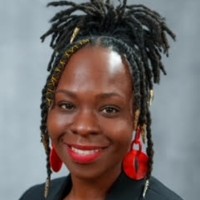
- Lives in: Saginaw
- Current job: Assistant principal of curriculum and instruction, Saginaw Public School District (since 2025)
- On the Delta board: Appointed February 2021 to fill a vacancy, elected 2022; board vice chair; Budget Cabinet member; vice chair of the Delta College Foundation board; recognized by the Michigan Community College Association in July 2026 for five years of service as a trustee
- Past experience: With Saginaw Public Schools since 2012, as an alternative education instructor at Success Academy and a multi-tiered system of support specialist; adjunct instructor at Saginaw Valley State University; founder of Education Empowerment Solutions, a tutoring and student support business
- Education: Bachelor's degree, Central Michigan University; master's degrees from the University of Phoenix and Saginaw Valley State University
- Stated positions: In a July 2026 LinkedIn post, she said every student deserves access to an affordable, high-quality education and that she would keep working to strengthen Delta through community partnerships
Sources: Delta College Board of Trustees | Saginaw Public School District | LinkedIn profile
What happens after Election Day?
- Results: County election officials report unofficial results on election night. Results become official after the county boards of canvassers certify them.
- Taking office: Winners begin their six-year terms on January 1, 2027.
- First decisions: At its January organizational meeting, the board elects its chair and vice chair.
- What continues regardless: The 2026–27 budget, tuition rates and the new president's leadership are already in place.
- If a seat opens later: The remaining trustees appoint a replacement by majority vote, who serves until the next regular board election.
- Next election: November 2028, when three more seats are on the ballot. College staff have said the next millage campaign is planned for 2028.
Learn more: Public meeting notices and regular meeting schedule | Board meeting agendas and minutes
How to Vote in Michigan
Knowing who's running is only half the equation. Here's how to make sure your vote actually counts on November 3rd (general election).
For the Delta College Board of Trustees, you may vote for one candidate in each of the three seats.
Look up your personal voter information
The Michigan Voter Information Center has everything you need in one place. Enter your information at mvic.sos.state.mi.us and you'll see:
- Whether you're registered to vote
- Your polling location on Election Day
- Your early voting location and hours
- Your absentee ballot status
- Your drop box locations
- All of your voting districts — county, state house, state senate, U.S. Congress, school board, and more
- Your local clerk's contact information
Key dates
- Early in-person voting: Statewide through Sunday, November 1. Check MVIC for your site and hours.
- General Election: Tuesday, November 3, 2026. Polls are open 7 a.m. to 8 p.m.
- Absentee ballots: Return yours to your clerk or drop box by 8 p.m. on Election Day.
- Michigan allows same-day voter registration at your local clerk's office.
Not registered? The deadline to register online or by mail has passed. You can still register in person at your city or township clerk's office through 8 p.m. on Election Day with proof of residency, and vote the same day.
Voter information is maintained by the Michigan Secretary of State. Contact your local clerk if you have questions about your specific situation.
New to your ballot? Read How to Vote in Michigan and How to Fill Out Your Michigan Ballot.
More Articles & Resources
We don't pick sides; we pull the sources together so you can read for yourself.
Official information
- Delta College Board of Trustees — members, meetings and minutes. https://www.delta.edu/board-of-trustees/
- Delta College budget transparency — budget, revenue and debt reports. https://www.delta.edu/transparency/
- Michigan Voter Information Center — your sample ballot and voting details. https://mvic.sos.state.mi.us
More from Michigan Women
- Do You Know Your Voting District?
- U-M Regents, MSU Trustees & WSU Governors 2026 Voter Guide
- Michigan State Board of Education 2026 Voter Guide
- Michigan Judicial Election 2026 Voter Guide
Help Build a More Informed Michigan
Democracy works best when every voter has access to clear, factual, and nonpartisan information.
If you found this guide helpful, you can help make sure the next voter finds it too.
Your support helps Michigan Women research statewide races, publish free voter guides, explain complex ballot issues, interview candidates, and expand civic education into more Michigan communities—all without subscriptions or paywalls.
Ways to Support
Donate
Help keep these guides free and available to every Michigan voter. https://michwomen.com/donate
Subscribe
Join our email list to receive new voter guides, election updates, and civic education resources. https://michwomen.com/join
Follow Michigan Women
Stay connected for new guides, interviews, videos, and election coverage. Facebook · LinkedIn · YouTube · TikTok · Instagram · Nextdoor
Share This Guide
Help friends, family, and neighbors make informed decisions by sharing this guide.
Key Sources
Ballot and candidates
- Bay County Clerk — Official Candidate List, November 3, 2026
- Saginaw County Clerk — Candidate List, November 3, 2026
- Michigan Department of State — Early in-person voting, October 23, 2026
The board and its record
- Delta College — Board of Trustees
- Delta College — Board of Trustees Bylaws
- Delta College — Board committees
- Delta College — Allmendinger selected as president, April 14, 2026
- Delta College — Special meeting minutes, April 14, 2026
- Delta College — Board dinner meeting minutes, March 10, 2026
- Delta College — Budget hearing minutes, June 9, 2026
- Delta College — Regular meeting minutes, June 9, 2026
- Delta College — Budget transparency
- Michigan Legislature — Community College Act, Section 121
- Michigan Legislature — Community College Act, Section 158
Candidate backgrounds
- Three Rivers Corporation — Chris Moultrup
- WSGW — New member joins Delta College Board of Trustees (2021)
- Saginaw Public School District — Arshen Baldwin promoted to assistant principal (2025)
Content Disclaimer: Michigan Women is a 501(c)(3) nonprofit organization and does not support or oppose any political candidate or party. This guide is a living resource, reviewed and updated throughout the election cycle as new, verified information becomes available. See "About This Guide" for our full research and editorial process.