
A closer look at what the new state standards actually say, what they change, and why they’ve...
Last update: October 7, 2026. Get to know the 2026 Michigan State Board of Education candidates, understand what the board does and why Michigan voters elect it, compare candidate priorities, and see how this race could change the board's balance — in this comprehensive, nonpartisan guide.
Table of Contents
This guide is designed for easy online navigation with clickable sections. If you would rather download or print a copy, use the PDF option below.
Continue to the Online Navigation 👇
- About This Guide
- About the Michigan State Board of Education Race
- What Is This Election For?
- What Is the State Board of Education?
- Why Do Michigan Voters Elect It?
- How Are the Candidates Chosen?
- What the State Board Can Do
- What the State Board Cannot Do
- How Does the State Board Affect My Community?
- What Has the State Board Been Doing?
- Who's on the State Board Now?
- Could This Election Change the Board's Balance?
- Top Issues Shaping the Race
- In the News
- Meet the Candidates
- What Happens After Election Day?
- What to Look for in a State Board of Education Member
- How to Vote in Michigan
- Help Build a More Informed Michigan
About This Guide
This guide is designed to help you understand both the office and the election—not tell you how to vote.
We begin by explaining what the office does, how much authority it has, and why it matters. From there, we cover the current race, the major issues, what to look for in a candidate, and profiles of everyone seeking the office. The goal is to provide the context you need to evaluate candidates based on the responsibilities of the job—not just campaign headlines.
Michigan Women updates these guides throughout the election cycle as new information becomes available. We review official government records, campaign websites, debate transcripts, campaign finance filings, public statements, and reporting from a wide range of reputable news organizations. New information is verified before it is added, and significant changes are incorporated as the race develops.
As a 501(c)(3) nonprofit organization, Michigan Women does not endorse or oppose candidates or political parties. Our role is to make Michigan government and elections easier to understand so every voter can make informed decisions with confidence.
To learn more about our research process, editorial standards, and commitment to nonpartisan civic education, visit our Strategy & Impact Guide:
https://michwomen.com/blog/michigan-women-strategy-impact-guide#voice-editorial-standards
About the Michigan State Board of Education Race
Near the end of the partisan section of your November ballot is a race many voters skip: the Michigan State Board of Education. Two of the board's eight seats are up this year, and the winners will help set the direction of public education for Michigan's roughly 1.4 million public school students for the next eight years.
VOTE: General Election: November 3, 2026
What is this election for?
Voters will fill two seats on the State Board of Education. Both are currently held by Democrats, Dr. Judith Pritchett and Tiffany Tilley, and both are running for re-election. Their current terms end January 1, 2027.
Ten candidates from seven parties are on the ballot. You may vote for up to two, and the two candidates with the most votes win. You don't have to choose two candidates from the same party. If you vote a straight-party ticket, your vote counts for both of that party's State Board candidates.
The winners take office January 1, 2027, and serve until January 1, 2035.
What is the State Board of Education?
The State Board of Education is an eight-member board created by the Michigan Constitution. Under Article VIII, Section 3, it has "leadership and general supervision" over public education in Michigan, including adult education. That excludes colleges and universities that grant bachelor's degrees. The board is also the state's general planning and coordinating body for education, and it advises the Legislature on what public education needs financially.
Members are elected statewide, not by district, to eight-year terms. The terms are staggered so that two seats are on the ballot every two years. The board meets monthly in Lansing. Meetings are open to the public, and anyone can sign up to give public comment.
How much are members paid? State Board seats are not salaried positions. Members receive a per diem set by the Legislature in the state's annual education budget: $100 a day, or $110 a day for the board president, for up to 30 days a year. That works out to a maximum of $3,000 a year ($3,300 for the president), plus reimbursement for approved expenses. The rate has stayed the same since at least 2015. For comparison, the State Superintendent the board hires earns $272,000 a year.
The State Superintendent. The board's most consequential power is choosing the State Superintendent of Public Instruction. The superintendent runs the Michigan Department of Education day to day, carries out the board's policies, and chairs board meetings without a vote. The governor also sits on the board as a non-voting member.
The Department of Education. The Department is the state agency that does most of the hands-on work: certifying teachers, running state tests like the M-STEP, publishing school performance data, overseeing special education, and distributing state and federal school funding. The board sets direction and hires the superintendent. The superintendent and the Department carry out the work.
Official sources: Michigan Constitution, Article VIII, Section 3 | FY2026 Education Budget, Sec. 351 (per diem)
Why do Michigan voters elect it?
Michigan has a long history of treating education as its own branch of state leadership. The state's first constitution created a Superintendent of Public Instruction in 1835. A State Board of Education was created by law in 1849, but for more than a century it focused mainly on teacher training schools and higher education. Under the 1908 constitution, voters elected the superintendent directly.
The current system came out of Michigan's 1961–62 Constitutional Convention. The 1963 Constitution created today's eight-member elected board, gave it general supervision over public education, and made the superintendent a position the board appoints rather than one voters elect. The new board took over on January 1, 1965.
The idea was to keep education leadership separate from the governor's office and accountable directly to voters.
How the board's role has shifted. In 1996, Gov. John Engler issued executive orders, effective in 1997, that moved most of the board's administrative duties to the superintendent. The board kept its constitutional role of supervision and policy leadership.
The debate today. Whether Michigan should keep this structure is an open question.
- Supporters of the elected board say it keeps education independent and gives voters a direct say. In April 2025, the board unanimously passed a resolution opposing a proposal to move the power to appoint the superintendent to the governor. Members of both parties supported that resolution.
- Supporters of change say Michigan's split system makes it unclear who is responsible for results. They include House Republicans, who introduced House Joint Resolution E in 2025, and a 2023 report from the Growing Michigan Together Council, which Gov. Whitmer appointed. Both called for giving the governor a role in choosing the superintendent.
Changing who appoints the superintendent would require amending the Michigan Constitution, which only voters can approve. No amendment on that specific question is on the November 2026 ballot. Voters will, however, decide whether to call a constitutional convention, which could open any part of the Constitution — including the section that creates the State Board — to revision.
Official sources: Michigan Department of Education: About the State Board | Executive Reorganization Order 1996-6
How are the candidates chosen?
Unlike candidates for governor or the Legislature, State Board of Education candidates don't run in an August primary. Each political party nominates its candidates at a state convention.
The process starts with you. In the August primary, voters elect precinct delegates, who are local party representatives listed on the primary ballot. Precinct delegates attend county conventions, which choose delegates to the party's state convention. Those state delegates vote on the nominees.
Smaller parties hold their own conventions to choose their candidates.
Because the nominees come from party conventions, State Board candidates appear on the ballot with a party label. That's different from Michigan Supreme Court candidates, who are nominated by parties but appear on the nonpartisan section of the ballot.
To learn more, read our guide: How Michigan Chooses Nominees for Statewide Offices.
Democratic convention results
At its nominating convention on August 29, 2026, at the Lansing Center, the Michigan Democratic Party re-nominated incumbents Dr. Judith Pritchett and Tiffany Tilley. The party had endorsed both at its spring endorsement convention.
Republican convention results
At its nominating convention on August 22, 2026, at the Soaring Eagle Event Center in Mt. Pleasant, the Michigan Republican Party nominated Terence Collins and Bree Moeggenberg. The party had endorsed both at its March 28 endorsement convention.
Other party nominations
- Charles Essner, Libertarian Party
- Wissam Charafeddine, Green Party
- William Mohr II, U.S. Taxpayers Party
- Christine C. Schwartz, U.S. Taxpayers Party
- Mary Anne Hering, Working Class Party
- Kelli Monroe, Natural Law Party
Official source: Michigan Advance: Michigan Democrats finalize nominations
What the State Board Can Do
Hire and evaluate the State Superintendent
The board appoints the superintendent, sets the length of the contract, evaluates performance each year, and can remove the superintendent by majority vote. This is the board's most direct way of shaping how the Department of Education operates.
Set statewide direction for education
The board adopts statewide goals for public education. Its current plan is Michigan's Top 10 Strategic Education Plan. It also hears regular reports on student achievement, attendance, literacy, and special education.
Adopt model standards and guidelines
The board approves statewide academic standards and guidance that school districts can use when building their own curriculum. The 2025 health education standards are a recent example.
Advise the Legislature on school funding
The Constitution requires the board to advise the Legislature on the financial needs of public education. The board also reports to the Legislature each year on its operations and recommendations.
Take public positions on education policy
The board passes resolutions supporting or opposing state and federal proposals. These resolutions don't carry the force of law, but they put the board's position on the record.
Appoint advisory committees and make rules where the law allows
For example, the board appoints the Special Education Advisory Committee, which advises it on services for students with disabilities.
What the State Board Cannot Do
Set the education budget
The Legislature writes the school aid budget and the governor signs it. The board can advise on funding but can't appropriate money.
Pass laws
Only the Legislature can pass laws. Some of the biggest recent education changes were written into law or the state budget by lawmakers, not adopted by the board. These include Michigan's high school graduation requirements and the requirement that elementary teachers complete science-of-reading training.
Choose your child's curriculum, books, or teachers
Local school boards choose curriculum and textbooks, hire staff, and set local budgets. State standards are guidance. Districts decide how to teach them.
Run the Department of Education day to day
The superintendent manages the Department's staff and operations.
Oversee universities
Michigan's public universities have their own governing boards. Voters elect the boards for the University of Michigan, Michigan State University, and Wayne State University on the same ballot.
Fill its own vacancies
If a seat opens mid-term, the governor appoints a replacement to finish the term.
How does the State Board affect my community?
Most families will never deal with the State Board directly, but its decisions reach local classrooms in a few ways.
- Through the superintendent it hires. That person leads the Department responsible for teacher certification, state testing, school ratings, special education oversight, and distributing school funding.
- Through the standards it adopts. Local districts often use state standards as the starting point when they review what they teach.
- Through the positions it takes. Board resolutions and recommendations often shape the debate in Lansing, even when lawmakers make the final call.
What stays local: your school board decides curriculum, hires teachers and principals, sets the school calendar, and asks voters to approve local bonds and millages. Under state law, parents keep the right to review sex education materials and opt their children out.
A useful question as you read the candidate profiles: which of a candidate's goals could the State Board actually act on, and which would depend on the Legislature or your local school board?
What has the State Board been doing?
The examples below show how the board has used its authority recently. This is not a complete list of every action taken.
Selected a new State Superintendent
In August 2025, the board chose Dr. Glenn Maleyko, then superintendent of Dearborn Public Schools, on a 5–3 vote from three finalists. He began on December 8, 2025, under a three-year contract, after the retirement of Dr. Michael Rice and a brief interim period.
Official source: MDE: Glenn Maleyko Selected to Be Michigan's Next State School Superintendent
Updated the health education standards
On November 13, 2025, the board voted 6–2, along party lines, to approve the first update to Michigan's health education guidelines since 2007. The guidelines cover topics including substance use, mental and physical health, and sex education. They include recommendations for instruction on gender identity and sexual orientation.
- Supporters, including the Michigan PTA, said the standards are age-appropriate and long overdue.
- Opponents, including some parents and pastors, said they undermine parental choice and religious liberty. Republican board member Nikki Snyder questioned whether the Department had the authority to adopt them.
The Department said the standards are guidelines, not mandates, and that local control and parents' right to opt out of sex education remain in place.
In February 2026, the U.S. Department of Justice opened investigations into three Michigan school districts related to instruction on sexual orientation and gender identity. Superintendent Maleyko said the federal inquiry mischaracterized the state guidelines and placed an administrative burden on districts.
Official source: MDE: Michigan's Revised Health Education Standards
Opposed moving the superintendent appointment to the governor
In April 2025, the board unanimously passed a resolution opposing House Joint Resolution E, which would amend the Constitution to let the governor appoint the superintendent.
Urged mandatory reading training for teachers
In September 2025, the board passed a resolution, sponsored by Tilley, urging the state to require science-of-reading training for teachers. The state has since made that training mandatory for elementary teachers by 2031.
Official source: SBE Resolution: Mandated LETRS/Science of Reading Training
Created a bipartisan special education committee
In June 2026, the board formed a Special Education Committee. Its members are President Pamela Pugh (D), who chairs it; Tom McMillin (R), the vice chair; Ellen Cogen Lipton (D); and Judith Pritchett (D). The committee plans to visit school districts and recommend ways to improve services for students with disabilities.
Official source: MDE: State Board Announces Bipartisan Special Education Committee
Other 2026 resolutions
The board asked the Legislature for funding to carry out its duties. In May 2026, the board voted 6–2, along party lines, to oppose Michigan's participation in the new federal tax credit scholarship program, which can fund private and public school expenses.
Official source: SBE Resolution Opposing the Federal Tax Credit Scholarship Program
Explore more
- State Board Agendas — https://www.michigan.gov/mde/about-us/state-board/agendas
- Meeting Minutes — https://www.michigan.gov/mde/about-us/state-board/meetings-minutes
- Resolutions — https://www.michigan.gov/mde/about-us/state-board/resolutions
- Meeting Videos — https://www.michigan.gov/mde/about-us/state-board/sbe-meeting-videos
Who's on the State Board now?
The board currently has six Democrats and two Republicans.
| Member | Party | City | Board Role | Term Ends |
|---|---|---|---|---|
| Dr. Pamela Pugh | D | Saginaw | President | Jan. 1, 2031 |
| Ellen Cogen Lipton | D | Huntington Woods | Co-Vice President | Jan. 1, 2029 |
| Tiffany Tilley | D | West Bloomfield | Co-Vice President | Jan. 1, 2027 — on the ballot |
| Dr. Judith Pritchett | D | Washington Township | Secretary | Jan. 1, 2027 — on the ballot |
| Marshall Bullock II | D | Detroit | Treasurer | Jan. 1, 2029 |
| Dr. Mitchell Robinson | D | Okemos | NASBE Delegate | Jan. 1, 2031 |
| Tom McMillin | R | Oakland Township | Member | Jan. 1, 2033 |
| Nikki Snyder | R | Goodrich | Member | Jan. 1, 2033 |
Non-voting members:
- Gov. Gretchen Whitmer, ex officio
- State Superintendent Dr. Glenn Maleyko, chair
Source: State Board of Education Membership List, dated February 25, 2026
How Long Is the Term, and Are There Term Limits?
- Term length: 8 years
- Term limits: None
- Seats on the ballot: 2 every two years
- Next election after this one: November 2028, for the seats held by Bullock and Lipton
Could this election change the board's balance?
Yes, depending on the result. The board currently has six Democrats and two Republicans, and both seats on the ballot are held by Democrats. There are three possible outcomes:
| If voters elect… | New board makeup |
|---|---|
| Both Democrats | 6 Democrats, 2 Republicans (no change) |
| One Democrat and one Republican | 5 Democrats, 3 Republicans |
| Both Republicans | 4 Democrats, 4 Republicans |
Why a 4–4 board matters. Under the board's bylaws, it takes a majority of the members serving, five votes on a full board, to take any action. On an evenly split board, nothing passes unless at least one member crosses party lines. That includes adopting standards, passing resolutions, and hiring, evaluating, or removing the State Superintendent.
The board also elects its own officers, including the president, in January of odd-numbered years. The next officer election is January 2027, the same month the winners of this race take office.
A divided board could slow down or block changes that one side supports. Whether that would mean more compromise or more gridlock depends on the members themselves.
What recent elections show. In each of the last four State Board elections, both seats went to the same party:
- 2018, 2020, and 2022: Democrats won both seats
- 2024: Republicans won both seats
These down-ballot races often follow how each party performs at the top of the ticket.
One more factor. If a seat opens up before a term ends, the governor appoints a replacement. That means the result of this year's governor's race could also affect the board's makeup in the years ahead.
Official source: State Board of Education By-Laws
Top issues shaping the race
The positions below come from interviews the four major-party candidates gave to Bridge Michigan, published September 23, 2026. They are not a full survey of each candidate's platform. The six minor-party candidates were not part of those interviews; see their profiles under Meet the Candidates.
Candidates from both parties agree Michigan's reading scores need to improve and that students with disabilities need more support. They differ most on the state's health education standards and on the performance of State Superintendent Glenn Maleyko.
| Issue | Democrats (Pritchett, Tilley) | Republicans (Collins, Moeggenberg) | Shared? |
|---|---|---|---|
| Literacy | Pritchett: wants teachers supported in the classroom, smaller class sizes, and more emphasis on parents reading to young children. Says the needed pieces are in place and the focus should stay there. Tilley: sponsored the 2025 board resolution urging mandatory reading training for teachers and supports the new requirement. Wants Michigan to study models from states with stronger literacy results. |
Collins: says the state is waiting too long to require phonics training. Wants it done within a year, with funding for teachers to train over breaks. Would send Department of Education staff to help in Pontiac, Flint, and Detroit. Moeggenberg: supports the science-of-reading approach but says classrooms need stable, focused learning environments for any curriculum to work. |
✅ All four support the state's science-of-reading direction. They differ on speed (Collins) and on what else matters most: class size and parents (Pritchett), other states' models (Tilley), classroom environment (Moeggenberg). |
| Special education | Pritchett: serves on the board's new special education committee and points to the shortage of special education teachers. Tilley: says there is room for improvement and supports the Department's leadership changes and the new committee. |
Collins: says paraprofessionals are underpaid, which leads to turnover. Wants them treated as a career, with funding to match. Moeggenberg: supports a pending Senate bill (SB 952) clarifying training requirements for special education teachers. Also emphasizes class size, teacher support, and parent involvement in IEPs. |
✅ All four say Michigan should do better. Democrats point to the board's committee; Republicans point to staffing pay and legislation. |
| Health education standards | Both voted for the updated standards in November 2025. Tilley has said the update was long overdue. | Both want the standards revisited. Collins: says gender identity guidance doesn't belong in schools and distracts from core academics. Moeggenberg: opposes instruction about gender transition and says health standards should be taught from a health perspective. |
Sharpest divide in the race. Mirrors the board's 6–2 party-line vote. |
| Other standards | Pritchett: wants to revisit science standards and build artificial intelligence into state standards, while keeping literacy first. Tilley: also wants more work on AI and stresses teaching history, including African American history. |
Collins: takes issue with social-emotional learning and wants more emphasis on merit and consequences. Moeggenberg: wants to revisit the Michigan Merit Curriculum's two-year foreign language requirement for students not headed to college. |
Different priorities; little direct overlap. |
| Superintendent Maleyko | Both praise his collaborative leadership and his work with educators statewide. | Both say they are unimpressed with his performance. Collins criticized his response to a federal investigation of three districts and his position on the federal tax credit scholarship program. Moeggenberg raised additional concerns (see Race Notes). | Clear partisan split. On a 4–4 board, his evaluations and any decision about his future would require bipartisan support. |
| Federal tax credit scholarship program | Both voted for the board's May 2026 resolution opposing Michigan's participation, which passed 6–2 along party lines. | Collins: disagrees with the superintendent's lack of support for the program. Moeggenberg: did not address the program in her Bridge interview. |
Partial. A cross-over issue with the governor's race, where the candidates also disagree. |
Source: Bridge Michigan: Who are the Michigan State Board of Education candidates?
We'll continue tracking these issues as campaigns release more information ahead of November.
In the News
State Board of Education races don't get much media coverage. The resources below offer candidate information and election tracking from news organizations and nonpartisan sources.
Voter Guides & Election Trackers
- Bridge Michigan: Who are the Michigan State Board of Education candidates? Interviews with the four major-party candidates on literacy, special education, standards, and the state superintendent. https://bridgemi.com/talent-education/who-are-the-michigan-state-board-of-education-candidates-what-to-know/
- Votebeat / Bridge Michigan: A complete guide to everything on Michigan's ballot this November. A plain-language overview of every statewide race and ballot question. https://votebeat.org/michigan/2026/09/16/midterm-election-2026-whats-on-your-ballot-voter-guide
- WDET 101.9 FM (Detroit Public Radio): 2026 Voter Guide. https://wdet.org/2026voterguide
- Ballotpedia: Michigan State Board of Education. Board history, current members, and past election results. https://ballotpedia.org/Michigan_State_Board_of_Education
- Wikipedia: 2026 Michigan State Board of Education election. A running summary of candidates and nominations. https://en.wikipedia.org/wiki/2026_Michigan_State_Board_of_Education_election
- Michigan Department of Education: State Board of Education. Official meeting agendas, minutes, resolutions, and videos. https://www.michigan.gov/mde/about-us/state-board
Meet the Candidates
Judith Pritchett (D)
 |
|
Top Priorities
The priorities below are drawn from the candidate's interview with Bridge Michigan (Sept. 23, 2026), in which all four major-party candidates answered the same questions. They reflect what each candidate emphasized, not a full campaign platform.
- Literacy first: Keep reading at the center of statewide efforts, and make sure teachers are supported in the classroom as new reading requirements take effect.
- Smaller class sizes: Move schools toward smaller classes, and encourage parents to read to young children at home.
- Special education: Address the shortage of special education teachers through the board's new Special Education Committee, which she serves on.
- Updated standards: Revisit the state's science standards and build artificial intelligence into state standards, while keeping literacy the top priority.
Endorsements
- Michigan Democratic Party: endorsed April 2026, nominated Aug. 29, 2026
- Michigan Education Association (MEA)
- AFT Michigan
Endorsements as of October 7, 2026.
Career
- Elected to the State Board of Education in 2018, her first run for public office. She received the most votes of any candidate in that race.
- Board Secretary since 2023. Chairs the board's Legislative Committee and serves on its Special Education Committee, formed in June 2026.
- More than 25 years in Macomb County public schools:
- Social studies teacher and assistant principal at Utica Community Schools
- Principal and administrator at Mount Clemens Community Schools
- Assistant superintendent and then superintendent of Center Line Public Schools
- Chief Academic Officer at Macomb Intermediate School District until retiring in 2017
Personal
- Bachelor's, master's, education specialist, and doctoral degrees from Oakland University
- Has lived in Macomb County for more than 40 years
- Married, with two children and two grandchildren
Race Notes
As an incumbent, Pritchett has a voting record on the board's most debated recent decisions:
- State Superintendent selection (2025). She was part of the 5–3 majority that selected Glenn Maleyko as State Superintendent in August 2025. Democrat Mitchell Robinson and both Republicans voted for other finalists. She has since praised Maleyko's direction and his work with educators across the state.
- Health education standards (2025). The board approved the updated health education standards 6–2 along party lines in November 2025. Both Republicans voted no. Supporters say the guidelines are age-appropriate and long overdue. Opponents, including both Republican candidates in this race, say they undermine parental choice and religious liberty.
- Federal tax credit scholarship program (2026). She voted with the board's 6–2 majority in May 2026 to oppose Michigan's participation in the federal tax credit scholarship program.
Supporters of the resolution said Michigan's Constitution bars public money for private schools. Opponents said no state tax dollars are involved.
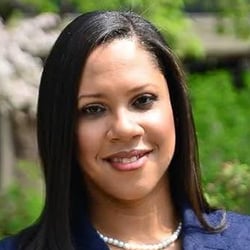
Tiffany Tilley (D)
 |
|
Top Priorities
The priorities below are drawn from the candidate's interview with Bridge Michigan (Sept. 23, 2026), in which all four major-party candidates answered the same questions. They reflect what each candidate emphasized, not a full campaign platform.
- Literacy: Build on the state's new requirement for science-of-reading training for teachers, which she pushed for on the board.
- Learning from other states: Study how states with stronger reading results structure local control, and recommend any Michigan policy or law changes that would help.
- Special education: Identify where the gaps are and how the state can better support districts serving students with disabilities.
- History and technology: Strengthen history instruction, including African American history, and expand work on artificial intelligence in education.
Endorsements
- Michigan Democratic Party: endorsed April 2026, nominated Aug. 29, 2026
- Michigan Education Association (MEA)
- AFT Michigan
Endorsements as of October 7, 2026.
Career
- Elected to the State Board of Education in 2018.
- Served as the board's delegate to the National Association of State Boards of Education beginning in 2019.
- Co-Vice President since 2023.
- In 2025, sponsored the board resolution urging the state to require science-of-reading training for teachers. The state later made that training mandatory for elementary teachers by 2031.
- Ran in the 2024 Democratic primary for Michigan's 10th Congressional District and finished third of four candidates.
- Former political director for the former 14th Congressional District
- Past roles:
- Project manager at a real estate development firm
- Executive director of the Southfield Community Anti-Drug Coalition
- Director of community and economic development for the City of Highland Park
Personal
- Bachelor's degree in organizational leadership and communications from Rochester College (now Rochester Christian University)
- MBA in international business from the University of Detroit Mercy
- Detroit native; lives in West Bloomfield
- Mother of two
Race Notes
As an incumbent, Tilley has a voting record on the board's most debated recent decisions:
- State Superintendent selection (2025). She was part of the 5–3 majority that selected Glenn Maleyko in August 2025. She has since described his leadership as collaborative and focused on building bridges.
- Health education standards (2025). She seconded the motion to approve the updated health education standards, which passed 6–2 along party lines in November 2025. During the debate she said the board was not pushing an agenda but updating guidelines that had not changed since 2007. Opponents, including Republican board member Nikki Snyder, called the standards an overstep on parental rights. In March 2026, the board's majority declined to take up Snyder's resolution to repeal them.
- Federal tax credit scholarship program (2026). She voted with the board's 6–2 majority in May 2026 to oppose Michigan's participation in the federal tax credit scholarship program.
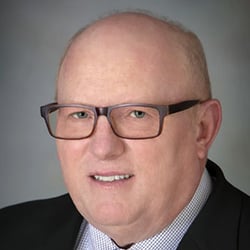
Terence Collins (R)
 |
|
Top Priorities
The priorities below are drawn from the candidate's interview with Bridge Michigan (Sept. 23, 2026), in which all four major-party candidates answered the same questions. They reflect what each candidate emphasized, not a full campaign platform.
- Faster reading training: Require phonics training for every teacher within a year, not by 2031, with funding so teachers can train over summer and school breaks.
- Targeted help for struggling districts: Send Michigan Department of Education literacy staff into Pontiac, Flint, and Detroit to work directly on reading.
- Special education staffing: Treat paraprofessionals as a career, with pay to match, so general education teachers have steady support in classrooms that include students with disabilities.
- Core academics: Revisit the health education standards, including the gender identity guidance, and refocus schools on reading, writing, and math.
Endorsements
- Michigan Republican Party: endorsed March 28, 2026, nominated Aug. 22, 2026
- The Detroit News editorial board (Sept. 29, 2026)
Endorsements as of October 7, 2026.
Career
- Senior financial analyst at General Motors. Describes more than 30 years of experience in program management, business development, budget planning, and quality systems.
- Appointed to the Grosse Pointe Public School System Board of Education in October 2023 to fill a vacancy. The board elected him treasurer for 2024.
- Ran for a full term on that board in November 2024 and was not elected.
- Member of the district's Finance and Facilities Committee beginning in 2023.
Personal
- Graduate of the University of Detroit (now University of Detroit Mercy)
- Grew up in St. Clair Shores; has lived in the Grosse Pointe area since 2000
- Father of three grown children and grandfather of three
Race Notes
In his interview with Bridge Michigan, Collins said the state's new guidance on gender identity does not belong in schools and distracts from core academics. He also criticized social-emotional learning.
He said State Superintendent Glenn Maleyko has fallen short. He pointed to two things:
- The federal investigation. Maleyko's response to a U.S. Justice Department investigation of three Michigan school districts. Maleyko said the federal inquiry mischaracterized the state's guidelines, which are nonbinding and preserve parents' right to opt their children out of sex education.
- The tax credit scholarship program. Maleyko's lack of support for the program.
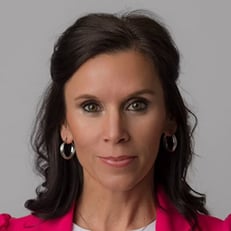
Bree Moeggenberg (R)
 |
|
Top Priorities
The priorities below are drawn from the candidate's interview with Bridge Michigan (Sept. 23, 2026), in which all four major-party candidates answered the same questions. They reflect what each candidate emphasized, not a full campaign platform.
- Classroom focus: Pair the state's science-of-reading approach with stable, focused classrooms, which she says any curriculum needs in order to work.
- Special education: Support a pending Senate bill (SB 952) clarifying training requirements for special education teachers, along with smaller class sizes and clearer parent involvement in IEPs.
- Standards review: Revisit the health education standards, and reconsider the two-year foreign language requirement for students not headed to college.
Endorsements
- Michigan Republican Party: endorsed March 28, 2026, nominated Aug. 22, 2026
- The Detroit News editorial board (Sept. 29, 2026)
Endorsements as of October 7, 2026.
Career
- Owned and operated Aunt Bree's Day Care, a licensed home child care business, from 2003 to 2024
- Co-author, illustrator, and co-owner of 'Merica Righters LLC (2024–2025)
- Recruiter for a canvassing company
- Elected to the Michigan Republican Party State Committee in 2023
- Served as a regional director of election integrity for the Trump campaign in Michigan, August–November 2024
- Former chair of the Isabella County chapter of Moms for Liberty, a national parental-rights organization
- In 2021, supported a recall effort against Mount Pleasant Public Schools board members after their vote on a school mask requirement
Personal
- Bachelor's degree in exercise and health science from Alma College (2001)
- Lives in Mt. Pleasant, Isabella County
- Mother of three
Race Notes
Comments about the State Superintendent. In her Bridge Michigan interview, Moeggenberg said she was not impressed with State Superintendent Glenn Maleyko. She questioned whether someone with dual U.S.-Canadian citizenship can serve both countries.
In a statement to Bridge, Maleyko did not address citizenship directly. He said he has been an educator in Michigan, where he lives, for more than 30 years, as a teacher, principal, and superintendent in Dearborn.
Health standards. She strongly criticized the state's health education standards in the same interview and said instruction about gender transition is political and dangerous.
Her campaign website asks supporters to sign a resolution calling on the state to retract the Department of Education's gender identity guidance. A similar resolution from Republican board member Nikki Snyder was not taken up by the board's majority in March 2026. At that time:
- Board President Pamela Pugh said it would politicize education.
- Maleyko said districts decide whether to use the guidelines and parents can opt out.
Other Candidates
Six minor-party candidates also appear on the November 3 ballot for State Board of Education. Public information about most of them is limited. We include what we could verify, and we'll update these profiles as more becomes available.
Charles Essner (Libertarian)
 |
|
Career
- Managing partner of CESSNER LLC, an Oxford machining and fabrication shop, since 2017.
- Worked at American Axle & Manufacturing's Oxford forge facility from 2010 to 2023, starting as a co-op engineer and later serving as manufacturing engineer, senior manufacturing engineer, and coordinator.
- No published platform or prior candidacies found as of October 7, 2026.
Personal
- Bachelor's degrees in mechanical engineering and in electrical and electronics engineering from Kettering University
Wissam Charafeddine (Green)
 |
|
Stated Priorities
In a 2026 statement explaining why he is running, Charafeddine said:
- Public education is a shared moral, economic, and democratic responsibility, and it should be measured by more than test scores.
- Michigan needs schools that innovate, include, and empower students, and that prepare them for technology, work, citizenship, and life.
- Teachers should be respected as professionals and parents treated as partners.
- He is running on Green Party values, including equity, sustainability, local empowerment, and public accountability.
Career
- Family engagement and community liaison at Hamadeh Educational Services, a Michigan PreK–12 education service provider, since 2014. Previously served there as dean of students and family engagement liaison (2008–2014).
- Founder of VoltRide, a shared e-bike network (2025–present).
- Lists his role as co-chair of the Green Party of the United States since 2025. Also co-chair of the Dearborn Greens and co-founder of the Green Party of Michigan's Arab and Muslim American Caucus.
- Co-founder of Muslimish, a support network founded in 2012, and of the Arab American Center for Culture and Arts (2019).
- Author of Universal Declaration of Human Values (2023).
Personal
- Master's degree in software engineering from the University of Michigan-Dearborn
- Born in the United Arab Emirates to Lebanese parents; became a U.S. citizen in 2004.
William Mohr II (U.S. Taxpayers)
| Photo not available |
|
Career
- U.S. Taxpayers Party nominee for Wayne State University Board of Governors in 2024.
- Ran for Kent City Community Schools board in 2022 and Tyrone Township trustee in 2020.
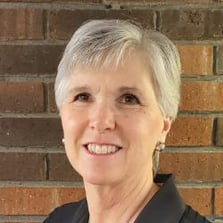
Christine C. Schwartz (U.S. Taxpayers)
 |
|
Career
- Served four terms on the Hopkins Public Schools board.
- Former Dorr Township deputy clerk; served on the township parks commission.
- Has held officer roles in the U.S. Taxpayers Party of Michigan.
- Previous statewide campaigns, all as the party's nominee:
- State Board of Education, 2024: 0.9%
- Secretary of State, 2022: 0.6%
- Wayne State University Board of Governors, 2018: 2.0%
Mary Anne Hering (Working Class)
 |
|
Stated Priorities
In a 2024 interview with Henry Ford College, Hering said:
- Public tax money should go to public schools and other public services.
- She opposes book bans and supports teaching history and core subjects.
- School employees, parents, and students should have access to State Board resources.
Career
- Retired social sciences instructor; taught college from 1973 to 2022, including 47 years at Henry Ford College.
- Working Class Party nominee for State Board of Education in 2018, 2020, 2022, and 2024. She received 2.3% statewide in 2024.
- Nominated again at the party's June 6, 2026 convention.
Personal
- Bachelor's degree in psychology from the University of Illinois Chicago
- Master's degree in ecological psychology from Michigan State University
Kelli Monroe (Natural Law)
|
Photo not available |
|
Her nomination was filed with the state on August 31, 2026. No published platform, occupation, or prior candidacies found as of October 7, 2026.
What Happens After Election Day?
After the November 3 results are certified, the two winners take office on January 1, 2027, for eight-year terms ending January 1, 2035.
One of the board's first decisions will be choosing its leaders. Under the board's bylaws, members elect a president, vice president, secretary, treasurer, and national delegate in January of odd-numbered years. That vote will happen in January 2027, with the new members taking part.
The superintendent continues. State Superintendent Glenn Maleyko's contract runs independently of the election. The board evaluates the superintendent each year. Any decision to change the superintendent requires a majority of the board, five votes on a full board.
If a seat opens later, the governor appoints someone to serve the rest of that term.
The next State Board election is November 2028, for the seats now held by Marshall Bullock II and Ellen Cogen Lipton.
Learn more
- Michigan Constitution of 1963, Article VIII, Section 3: https://www.legislature.mi.gov/Laws/MCL?objectName=MCL-ARTICLE-VIII-3
- State Board of Education By-Laws: https://www.michigan.gov/mde/about-us/state-board
What to Look for in a State Board of Education Member
Once you understand what the State Board does, the next question is: what helps someone do this job well? Board members don't run schools or write budgets. They set direction, hire and evaluate the superintendent, and speak for public education statewide. That calls for a different set of skills than most elected offices.
Understanding of what the board can and can't do
The board's power is real but limited. The Legislature controls funding and passes laws, and local school boards choose curriculum and hire staff. A strong candidate knows where the board's authority ends and can explain which of their goals the board can act on directly.
Focus on student results
Michigan's reading scores have declined, and student achievement is central to this race. Look for candidates who talk specifically about how they would measure progress and what they would do if results don't improve.
Experience in education, or a useful perspective from outside it
Some voters value years spent in classrooms and school administration. Others value backgrounds in finance, business, or parenting that bring a different lens. Both can be assets. The question is whether a candidate's experience fits the board's actual work: setting policy, overseeing the superintendent, and advising lawmakers.
Ability to work across differences
The board can only act with five votes. If this election produces a 4–4 split, nothing passes without at least one member crossing party lines. Even with a majority, the board's recommendations carry more weight when they have broad support. How a candidate has worked with people they disagree with is worth a close look.
Oversight of the superintendent
Hiring, evaluating, and, if needed, replacing the State Superintendent is the board's most direct lever. A strong candidate can explain how they would hold the superintendent accountable and what they would expect from the Department of Education.
Openness to families and educators
The board meets in public, takes public comment, and is meant to hear from parents, teachers, and students across the state. Consider how a candidate has listened to people who disagree with them, and how they would keep the public informed.
Stewardship of public resources
The board doesn't control the budget, but it advises the Legislature on what schools need and oversees a department that distributes billions in state and federal funding. Look for candidates who can speak clearly about how education dollars are spent and measured.
How to Vote in Michigan
Knowing who's running is only half the equation. Here's how to make sure your vote actually counts on November 3rd (general election).
For State Board of Education, you may vote for up to two candidates. You can choose candidates from different parties.
Look up your personal voter information
The Michigan Voter Information Center has everything you need in one place. Enter your information at mvic.sos.state.mi.us and you'll see:
- Whether you're registered to vote
- Your polling location on Election Day
- Your early voting location and hours
- Your absentee ballot status
- Your drop box locations
- All of your voting districts — county, state house, state senate, U.S. Congress, school board, and more
- Your local clerk's contact information
Key dates
- General Election: November 3, 2026
- Early voting is available — check the MVIC site for your specific location and hours
- Michigan allows same-day voter registration at your local clerk's office
Not registered? You can register online at mvic.sos.state.mi.us if you have a Michigan driver's license or state ID, by mail, or in person at your local clerk's office. If you're registering within 14 days of an election, you must do so in person.
Voter information is maintained by the Michigan Secretary of State. Contact your local clerk if you have questions about your specific situation.
Help Build a More Informed Michigan
Democracy works best when every voter has access to clear, factual, and nonpartisan information.
If you found this guide helpful, you can help make sure the next voter finds it too.
Your support helps Michigan Women research statewide races, publish free voter guides, explain complex ballot issues, interview candidates, and expand civic education into more Michigan communities — all without subscriptions or paywalls.
Ways to Support
Donate
Help keep these guides free and available to every Michigan voter. https://michwomen.com/donate
Subscribe
Join our email list to receive new voter guides, election updates, and civic education resources. https://michwomen.com/join
Follow Michigan Women
Stay connected for new guides, interviews, videos, and election coverage.
- Facebook: https://www.facebook.com/michwomencoalition/
- LinkedIn: https://www.linkedin.com/company/michigan-women
- YouTube: https://www.youtube.com/@MichiganWomen
- TikTok: https://www.tiktok.com/@michwomen
- Instagram: https://www.instagram.com/michigan_women/
- Nextdoor: https://nextdoor.com/pages/michigan-women-saginaw-mi/
Share This Guide
Help friends, family, and neighbors make informed decisions by sharing this guide.
Michigan Women Education Fund
Michigan Women Education Fund is a registered 501(c)(3) nonprofit organization. Contributions are tax-deductible to the extent allowed by law.
Together, we can help every Michigan voter make a more informed decision at the ballot box.
Content disclaimer: Michigan Women researches information from official websites, government records, campaign materials, debate transcripts, campaign finance filings, news outlets, and other public resources. We strive to provide accurate, balanced, and current information, but election information can change quickly. Michigan Women Education Fund is a 501(c)(3) nonprofit organization and does not support or oppose any political candidate or party. This content is intended solely for civic education and public awareness.