If our differences can make our decisions better, what happens when political rhetoric teaches us...
A comprehensive guide to political parties, labels, beliefs, psychology and rhetoric — and how we can work together when we disagree.
Why can Democrats and Republicans look at the same problem and reach completely different conclusions?
That's the question behind Beyond Political Labels: How We Think, Govern, and Build Thriving Communities, our comprehensive guide to understanding political differences — and what happens when those differences become more about defeating each other than solving problems.
The guide looks beyond candidates and campaign messaging to explore some bigger questions:
- Why do we have political parties, and why does winning the majority matter?
- What do political labels like liberal, conservative, socialist, communist, populist and fascist actually mean?
- What do Democrats and Republicans generally believe — and why can they want similar outcomes but support very different solutions?
- How do personality, intuition and psychology influence what we notice and how we think about political issues?
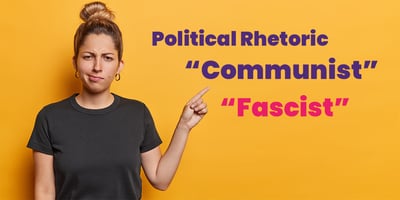
- Why are labels like “communist” and “fascist” so effective as political rhetoric?
- How can different perspectives actually help us make better decisions?
- What does it take to work together to build communities that actually thrive?
The goal isn't to make you less Republican or less Democratic. It's to help you look past the labels, understand what may be driving our disagreements and ask better questions about the problems we're trying to solve.
Beyond Political Labels: How We Think, Govern, and Build Thriving Communities brings the full discussion together in one place, including political parties and ideologies, Democratic and Republican governing instincts, political psychology, political rhetoric, human cooperation and the research and sources behind the guide.
Download the Free Guide PDF
Or continue to online navigation 👇
Explore the Guide Online
Prefer to explore one topic at a time?
We've broken the major sections of Beyond Political Labels into individual articles you can read online.
-
Why Do We Have Political Parties? Learn why political parties formed, how they create coalitions, why winning a majority matters and how the need to win elections can sometimes compete with the work of governing.
-
What Do Political Labels Actually Mean? Understand the difference between political parties, ideologies and movements — and what labels like liberal, conservative, progressive, democratic socialist, socialist, communist, populist and fascist actually mean.
-
What Do Democrats and Republicans Believe—and Why? Explore the governing instincts commonly associated with Democrats and Republicans, why people can look at the same problem and notice different risks, and how psychology can shape the conclusions we reach.
-
Why Do Politicians Use Political Rhetoric to Win Elections? See how labels like communist and fascist can simplify complicated disagreements, shape how we see political opponents, motivate voters and influence elections.
-
How Can We Work Together to Build Thriving Communities? Explore cooperation, shared responsibility and the free-rider problem — and a practical way to evaluate political issues by starting with the problem instead of the party.
Start With the Problem, Not the Party
One of the central ideas in the guide is simple: people with different political instincts may notice different risks, ask different questions and see weaknesses in solutions that others miss.
So when you're evaluating a political proposal, try starting somewhere other than the party label:
- What problem are we trying to solve?
- What outcome do we actually want?
- What is my first reaction — and what might I be missing?
- What does the other perspective see that I don't?
- What are the tradeoffs?
- Who benefits? Who pays? Who carries the risk?
- What evidence would tell us whether the solution is actually working?
The goal isn't agreement. It's a better decision.
Because at the end of the day, the question isn't which side wins the argument. It's whether the community works.
Content Disclaimer: Our team researches information from official websites, news outlets, and other public resources to make it easier for Michigan residents to stay informed. We strive to provide accurate, balanced, and up-to-date information, but we may occasionally miss updates or changes. Michigan Women is a 501(c)(3) non-profit organization and does not support or oppose any political candidate or party. This content is intended solely for civic education and public awareness.